
Skip the Scrub.
Every litter box type, honestly compared.
Disposable trays, plastic tubs, covered enclosures, automatic units, liners and sifting systems — what each one costs, how it handles odour, and how long you spend cleaning it. If you already know your situation, jump straight to the best cat litter box for it.
At a glance
 At a glance
Every litter box type, side by side.
| Type | Cleaning | Odour | Cost | End of life |
|---|---|---|---|---|
| Disposable paper tray | Dispose and replace, <1 min | Resets to zero | €14.59 / 3 trays | General waste or home compost |
| Plastic open tray | Weekly scrub with detergent | Returns faster over time | Cheap upfront, replaced yearly | Landfill for centuries |
| Covered box / enclosure | Disassemble to clean | Concentrates odour inside | Mid to high | Landfill |
| Automatic box | Empty the drawer, service the motor | Depends on liner and litter | €300–700 plus refills | Electronics waste |
| Liner + plastic tray | Lift the liner, still wash the tub | Urine pools under the sheet | Low, but recurring | Plastic film, landfill |
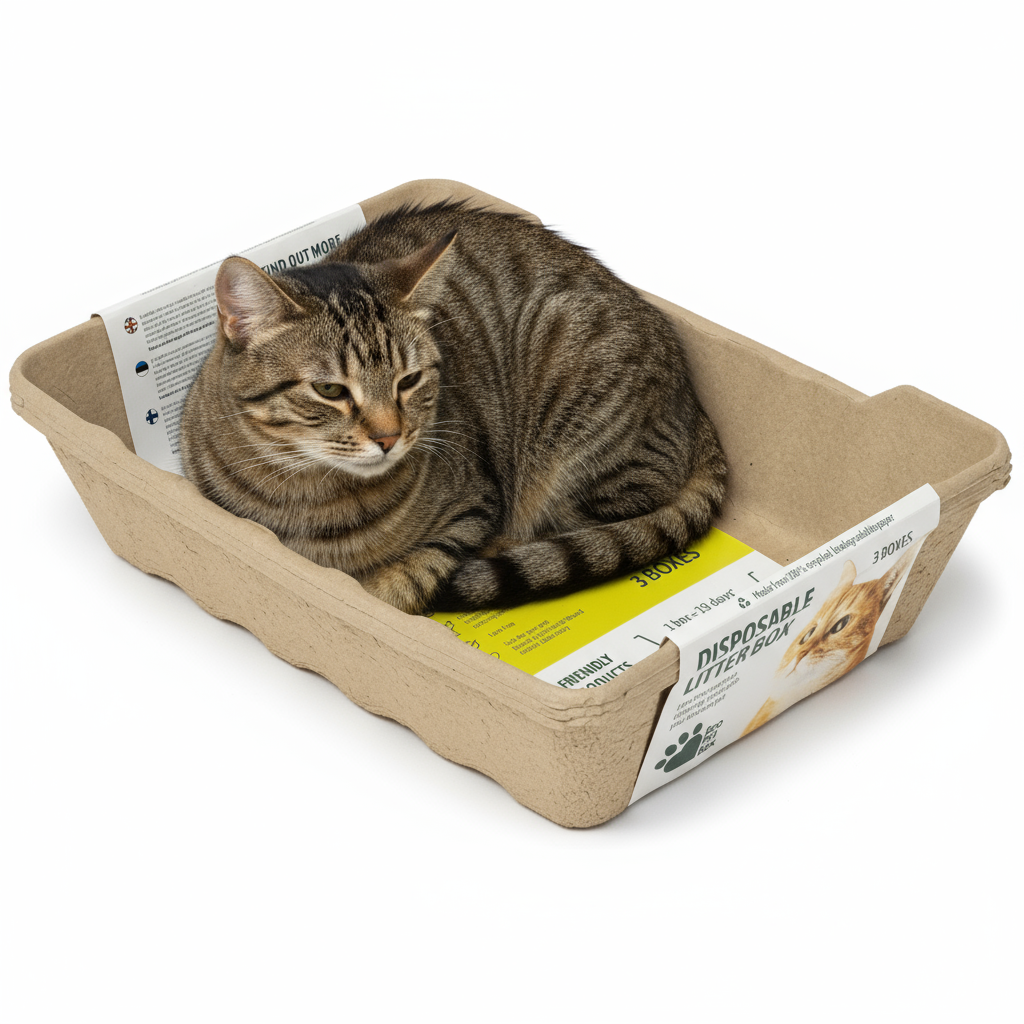
EcoPetBox trays are pressed from recycled paper pulp: leak-resistant in use, plastic-free and PFAS-free, and disposed of whole in general household waste or home compost — not paper recycling, since a used tray is contaminated. See the tray range.
Choosing a litter box
Start with the situation — cat size, home size, digging habits, who does the cleaning — then pick the box that fits it.
Best cat litter box 2026: picks by use case
Large cats, small flats, diggers, travel, multi-cat homes and accessibility.
UK cat litter guide: trays, litter and scoops
Flat-sized trays, wood litter, scoops and UK bin rules for used litter.
Best litter box for large cats
Length before depth: what Maine Coons and Ragdolls actually need.
How many litter boxes per cat?
The plus-one rule and why sharing causes accidents.
Cat not using the litter box?
The usual causes, in the order worth checking.
Disposable litter boxes
Single-use trays you dispose of whole instead of scrubbing. The fastest routine, and the one this site is built around.
Disposable litter box: the full guide
How they work, how long a tray lasts, cost and disposal.
Disposable litter box with litter included
Pre-filled trays for travel, clinics and first-time users.
Cardboard box vs moulded paper pulp
Why corrugated board warps and pressed pulp does not.
Will a cat scratch through a paper tray?
Evidence from shelters running 20–50 cats.
Covered boxes and litter box enclosures
Hoods, cabinets and furniture-style enclosures hide the box but trap odour and make cleaning slower. Here is how to get the look without the smell.
Why an enclosed box smells faster
Ammonia builds up in still air; a covered plastic tub concentrates it.
When a cat stops using a covered box
Enclosures are a common cause of litter box avoidance — and how to fix it.
Enclosures and large cats
Maine Coons and Ragdolls need turning room most cabinets do not give.
Small flats, apartments and hidden trays
Placement, airflow and a tray that fits a UK bathroom or cabinet footprint.
Plastic trays, liners and sifting systems
The traditional setup, and the three things people try to make it bearable.
What happens to a plastic tray over time
Micro-scratches soak up urine; odour returns faster after every wash.
Litter box liners: do they actually work?
Why liners tear, trap urine underneath, and cost more over a year.
Sifting trays vs disposable trays
Sifting still leaves you a tub to wash.
Why cats dig readily in paper pulp
A matte, natural surface instead of slick plastic.
Automatic and subscription litter boxes
The expensive end of the market. Worth comparing before spending several hundred euros.
Disposable vs automatic litter box
Cost over three years, failure modes and noise.
Disposable trays vs litter subscriptions
What a monthly box really costs per week.
EcoPetBox vs Kitty Poo Club
Two disposable systems, side by side.
Eco-friendly and biodegradable options
Materials, end of life and the numbers behind the claims.
Best eco-friendly & biodegradable litter box
What to look for, and where EcoPetBox lands.
Why recycled paper pulp
PFAS-free, plastic-free, breaks down in months.
Lifecycle analysis 2026
Measured impact against a plastic tray routine.
The paper napkin argument
Why single-use is not automatically the worse choice.
Situations: travel, clinics, shelters, accessibility
Where a fresh tray per use matters more than anything else.
Travel, RV, Airbnb and temporary use
Set up in seconds, dispose of before departure.
Vet clinics and post-surgery recovery
Single-use hygiene, no cross-contamination.
Arthritis, limited mobility and chemical sensitivity
A change that takes under a minute, no bleach.
Rabbits and other small animals
Ammonia build-up and respiratory health.
Ready to skip the scrub?
A set of three EcoPetBox trays has an RRP of €14.59 — around three weeks for one cat, with no detergent, no bleach and no plastic tub to store.