
Veterinary use
Disposable Litter Boxes for Vet Clinics and Post-Surgery Recovery
In a veterinary clinic, a shelter or the first two weeks home after surgery, hygiene isn't a preference — it's the whole point. A disposable litter box removes the single biggest source of cross-contamination in a boarding kennel or recovery pen: the shared plastic tub that gets scrubbed between patients and still tests positive for bacteria. Here's why vets and post-op cat owners are increasingly using EcoPetBox.
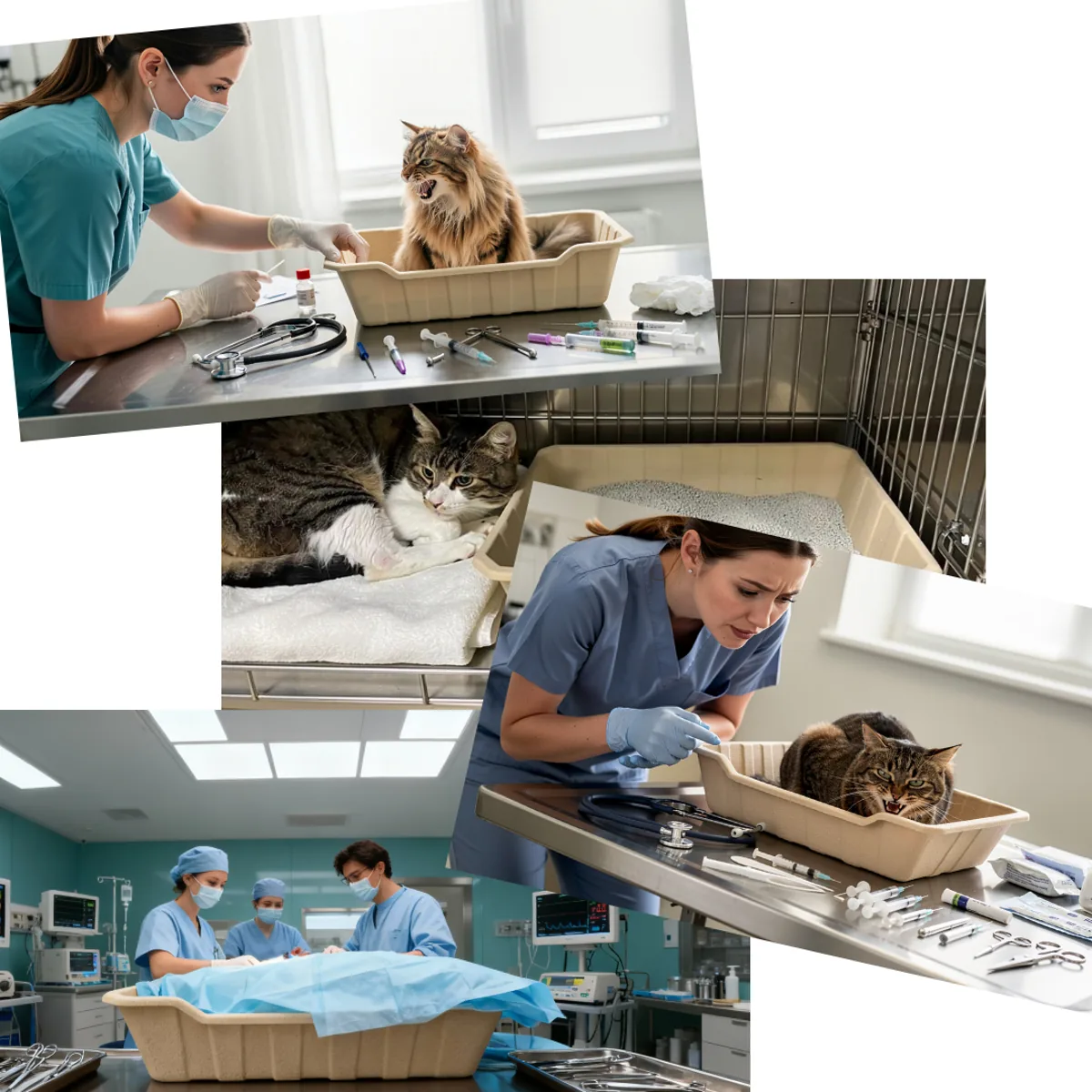
"Between patients you don't want to bleach a plastic box — you want to bin it and put a new one down."
Why plastic litter boxes fail in clinical settings
Plastic litter tubs in a boarding kennel, recovery ward or shelter carry three risks: micro-scratches that trap urinary and faecal bacteria across cleanings, chemical residue from repeated bleach cycles that irritates recovering cats, and cross-contamination between animals even after full washdown. Veterinary infection-control protocols acknowledge this — most clinics already replace bedding and litter between patients but keep the tub because there's no clinical-grade disposable alternative.
EcoPetBox is that alternative. The tray IS the box, so the entire item is disposed of and replaced — not scrubbed and reused.
Why it works after surgery at home
The first two weeks after spay/neuter, dental surgery, wound repair or any procedure involving stitches are the highest-risk window for infection. Vets routinely recommend switching to paper-based litter to avoid dust and clay sticking to incision sites — but the plastic box itself is often overlooked as an infection vector.
A disposable tray solves both problems: it's compatible with the paper/wood litters vets recommend, and it lets owners replace the whole tray every few days without the fumes and effort of bleaching a plastic tub with a post-op cat in the room. When the recovery period ends, the last tray goes in general waste — no permanent plastic box hanging around the house.
Where clinics use EcoPetBox today
Boarding kennels use it as the standard between-patient tray. Recovery wards use it during the isolation window after surgery or after infectious disease treatment. Mobile vets and home-visit practices use it because there's no tub to carry back. Shelters use it for intake and quarantine periods where every tray needs to be discarded, not sanitised.
Bulk pricing is available to veterinary clinics, animal hospitals and rescues through our distribution enquiry form.
Plastic tub vs disposable tray in a clinical setting
The comparison changes completely once you factor in cross-contamination risk and cleaning-agent exposure.
| Feature | EcoPetBox (disposable) | Plastic tub |
|---|---|---|
| Between-patient turnaround | Bin and replace — under 1 min | Scrub, disinfect, dry — 10+ min |
| Bleach / disinfectant exposure | None — tray is discarded | Every cycle, residue possible |
| Micro-scratches trapping bacteria | None — single use | Accumulates with every scoop |
| Cross-contamination risk | Removed at source | Present even after disinfection |
| Compatible with post-op paper litter | Yes | Yes |
| End-of-life | Biodegrades in 3–6 months | Landfill, decades |
When a disposable tray is the right call clinically
- Boarding — between different patients in the same pen
- Post-surgery recovery — first 10–14 days at home
- Isolation / quarantine wards
- Mobile and home-visit veterinary practice
- Shelter intake and adoption transition
- Immunocompromised or elderly cats where hygiene margin matters
Frequently asked questions
Is a disposable litter box safe after surgery?
Yes — it's often the safer option because it removes the shared plastic tub that can trap bacteria across cleanings. Fill it with a vet-recommended paper or wood litter (both work with EcoPetBox) and replace the whole tray every 2–3 days during the recovery window.
Read the full articleDo clinics get bulk pricing?
Yes. Veterinary clinics, animal hospitals, boarding facilities and shelters are eligible for bulk pricing. Send us a distribution enquiry with expected monthly volume and we'll respond within 1 business day.
Read the full articleHow is EcoPetBox different from cardboard hospital trays?
Cardboard hospital trays are shallow, coated (often with PFAS) and rarely biodegradable. EcoPetBox is moulded recycled paper pulp — leak-resistant for the full use cycle, PFAS-free (Intertek tested) and biodegradable in 3–6 months.
Read the full articleRelated articles
 Related articles
Not ready to enquire yet? These may answer your question first.
September 4, 2026

Square by design: why EcoPetBox pet bowls aren't round
Read the full article: Square by design: why EcoPetBox pet bowls aren't roundJuly 1, 2026
Sifting vs disposable litter box: which saves you time?
Read the full article: Sifting vs disposable litter box: which saves you time?July 1, 2026

How to pick a disposable litter tray for travel
Read the full article: How to pick a disposable litter tray for travelBulk pricing for clinics, shelters and boarding
Request veterinary and shelter pricing — we'll respond within one business day.