
Buyer's guide
The Best Litter Box for Large Cats in 2026 (Maine Coons, Ragdolls & Big Breeds)
Owners of Maine Coons, Ragdolls, Norwegian Forest Cats, Savannahs and other large breeds run into the same problem: standard litter boxes are too small, high-sided plastic boxes are heavy and hard to clean, and jumbo hooded boxes trap odour. Here's what to actually look for in a litter box for a large cat — and why a disposable, high-sided fibre tray is the most practical answer for high-volume households.
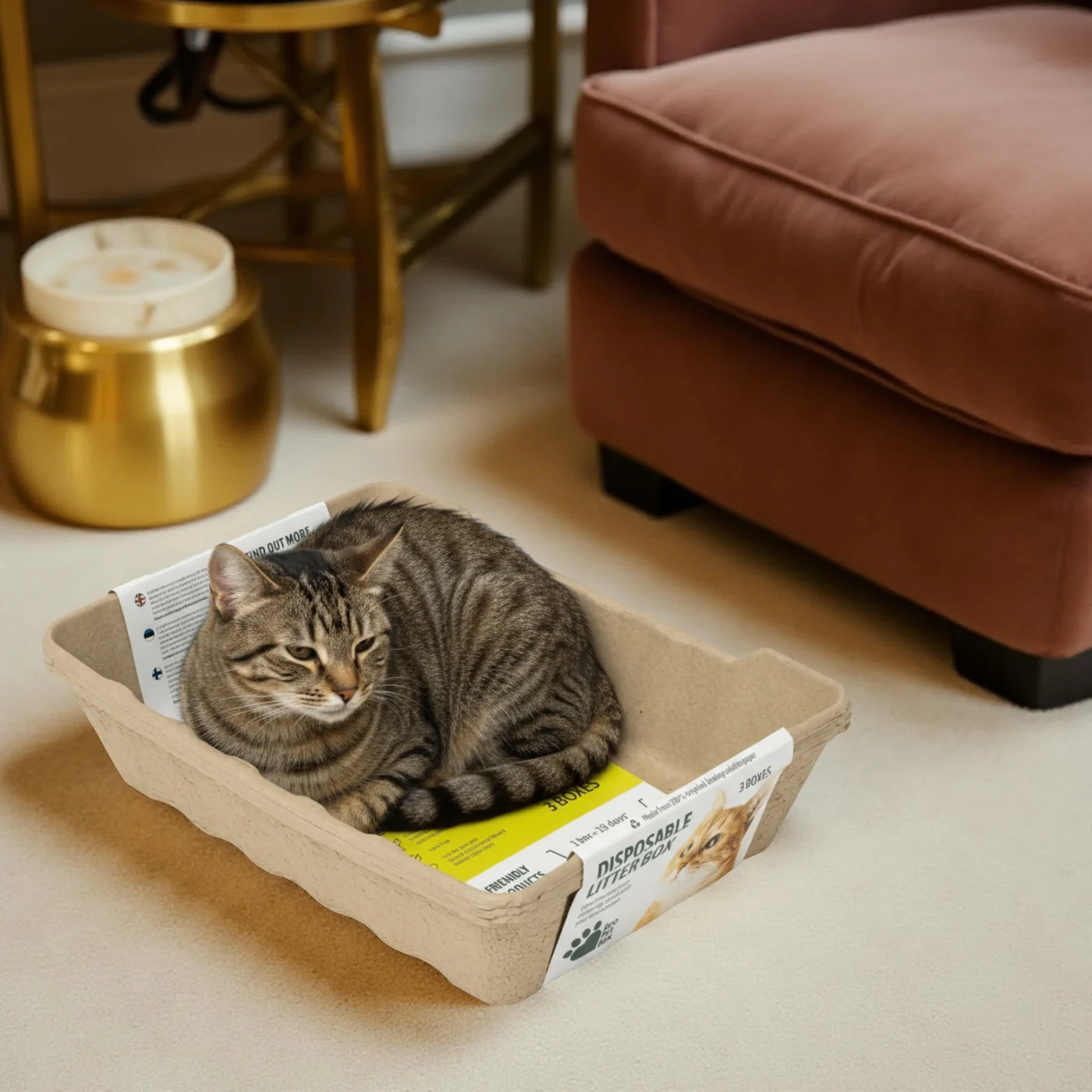
"A big cat needs 1.5× its body length of tray space. Almost no plastic box on the shelf hits that number."
How big does a litter box need to be for a large cat?
A common rule of thumb is 1.5 times the length of your cat measured nose to tail base. For an average Maine Coon (90–100 cm total length, ~55 cm nose-to-tail-base) that's roughly 80 cm long. Most "jumbo" plastic boxes on the market are 55–65 cm — comfortable for an average domestic shorthair, cramped for a Maine Coon.
A cropped tray forces a big cat to hang off the edge, miss the litter, or refuse the box altogether. Peeing over the side is almost always a size problem, not a behaviour problem.
What is the best litter box for a Maine Coon cat?
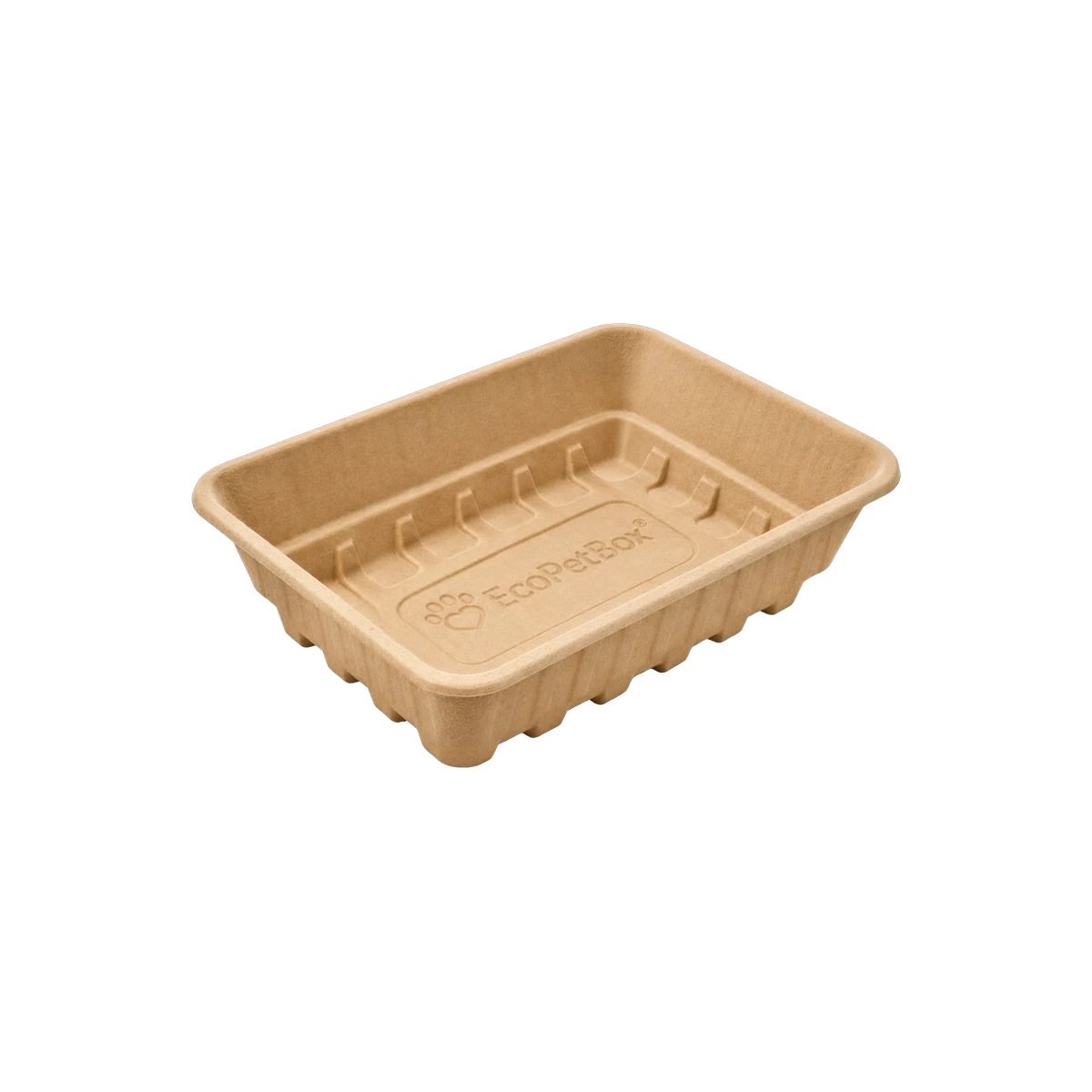
As general guidance, choose a litter box at least 1.5× your cat's nose-to-tail-base length, with high sides, a low entry and no hood; the 75–80 cm guideline depends on your cat's measurement. The EcoPetBox XL litter tray, 2 pcs measures 550 × 380 × 140 mm and is a larger-than-standard option, but its 55 cm length is shorter than 75–80 cm — measure your own cat first before choosing it.
Why big plastic boxes are the wrong answer
The go-to solution — an XXL plastic tote or a plastic storage bin with a cut-out — solves the size issue but creates new ones. It's heavy to lift, awkward to empty, scratches quickly under a large cat's claws, and once scratched it traps odour and bacteria permanently. High-volume urine from a big cat accelerates all of it.
Hooded jumbo boxes are worse: they concentrate ammonia inside the hood, which large cats (with their larger noses and larger lung capacity) tend to reject faster than smaller cats.
What to look for in a litter box for a large cat
The right box for a big breed is long (75 cm+), has high sides at the back and sides (12–18 cm) with a lower front entry, no hood, is easy to lift when full, and is quick to fully replace rather than scrub. Few trays of any kind reach 75 cm, so measure your cat and pick the longest option that fits your space. Disposable fibre trays cover the rest of the list: they weigh a fraction of a plastic tote when full and get binned rather than washed.
Why EcoPetBox works for large breeds
EcoPetBox is a disposable, ready-to-use litter tray made from multi-layer moulded fibre with high sides for splash and dig-out containment. The XL tray (550 × 380 × 140 mm) is the largest size; check it against your own cat's measurement. No plastic, no PFAS, no wax coating. When the tray is spent, it goes in the general waste or home compost and biodegrades in 3–6 months. No scrubbing a 5 kg plastic tote in the bathtub.
For a Maine Coon-sized household, plan on more frequent replacement than an average cat — big cats produce more urine and dig more litter. A three-tray set typically covers 3–4 weeks of solo use for a large breed, or pair the trays with our natural wood or wood-and-hay litter for maximum absorbency.
EcoPetBox vs XXL plastic tote for a large cat
For a Maine Coon or similar large breed, the practical differences between a disposable fibre tray and the go-to XXL plastic tote add up fast — in weight, hygiene and time spent cleaning.
| Factor | EcoPetBox (XL fibre tray) | XXL plastic tote |
|---|---|---|
| Length | XL: 55 cm (550 × 380 × 140 mm) | Varies; often 55–65 cm |
| Weight when full | Light — carry with one hand | Heavy — two-hand lift |
| Cleaning | Bin the whole tray | Scrub, bleach, rinse, repeat |
| Scratched-plastic odour | None — fresh tray each cycle | Builds within weeks |
| Material | Renewable moulded fibre | Petroleum plastic |
| End of life | Biodegrades in 3–6 months | Landfill for centuries |
Checklist: the right litter box for a large cat
- Length ≥ 1.5× your cat's nose-to-tail-base measurement
- High sides (12–18 cm) at back and sides to catch splash and dig-out
- Low front entry — big cats step in, they don't jump in
- No hood — large cats reject concentrated ammonia faster
- Lightweight when full — a full jumbo plastic tote is a two-hand lift
- Fully replaceable, not scrub-and-reuse — high-volume urine ruins plastic quickly
Frequently asked questions
What is the best litter box for a Maine Coon cat?
Use the general rule of at least 1.5× your cat's nose-to-tail-base length, with high sides, a low entry and no hood. The EcoPetBox XL litter tray, 2 pcs is a larger-than-standard option measuring 550 × 380 × 140 mm, but its 55 cm length does not meet the 75–80 cm guideline; measure your own cat first.
Is a litter box for a Maine Coon cat different from one for a Ragdoll?
The same general guidance applies to both breeds: at least 1.5× nose-to-tail-base length, high sides, a low entry and no hood. The EcoPetBox XL tray, 2 pcs measures 550 × 380 × 140 mm and is a larger-than-standard option, not a tray that meets the 75–80 cm guideline — measure your own cat first rather than choosing by breed alone.
What size litter box does a Maine Coon need?
At least 75–80 cm long. The rule of thumb is 1.5× your cat's nose-to-tail-base length. Most Maine Coons measure 50–60 cm nose-to-tail-base, so almost no standard plastic box is big enough.
What is the best litter tray for a Maine Coon?
"Litter tray" and "litter box" mean the same thing, so the same rule applies: at least 1.5× your cat's nose-to-tail-base length, high sides, a low entry and no hood. Our largest option is the EcoPetBox XL litter tray, 2 pcs at 550 × 380 × 140 mm; measure your own cat first.
Are high-sided disposable trays strong enough for a large cat?
Yes. EcoPetBox uses multi-layer moulded fibre engineered to hold litter and moisture for the full replacement cycle, even under a heavy digger.
How often do I need to replace the tray for a large breed?
Plan on more frequent replacement than an average cat — typically every 8–10 days for a single large cat, sooner in multi-cat households. A three-tray set covers about 3–4 weeks of solo use for a big breed.
Can I use my usual litter with it?
Yes. EcoPetBox works with any cat litter. For a large cat we recommend a highly absorbent natural wood or wood-and-hay litter, which biodegrades together with the tray.
Related articles
 Related articles
Not ready to enquire yet? These may answer your question first.
July 7, 2026

Will my cat scratch through an EcoPetBox tray?
Read the full article: Will my cat scratch through an EcoPetBox tray?July 1, 2026

The best eco-friendly & biodegradable litter box in 2026
Read the full article: The best eco-friendly & biodegradable litter box in 2026October 25, 2026

Traveling with cats: reusable vs disposable litter trays
Read the full article: Traveling with cats: reusable vs disposable litter traysBuilt for big cats and busy households
See the XL EcoPetBox tray plus natural, highly absorbent wood and hay litters — the plastic-free setup for Maine Coons, Ragdolls and other large breeds.