
Cat behaviour
The Cat + 1 Rule: Why Every Cat Needs One More Litter Box Than You Think
Most cat owners believe one cat means one litter box. From a human point of view that's efficient. From a cat's point of view, a litter box is not a purely functional object — it's a sensitive retreat that has to feel safe, quiet and clean. That's why behaviourists have converged on a simple rule of thumb: number of cats plus one. Add an extra box, and a surprising number of everyday problems disappear.
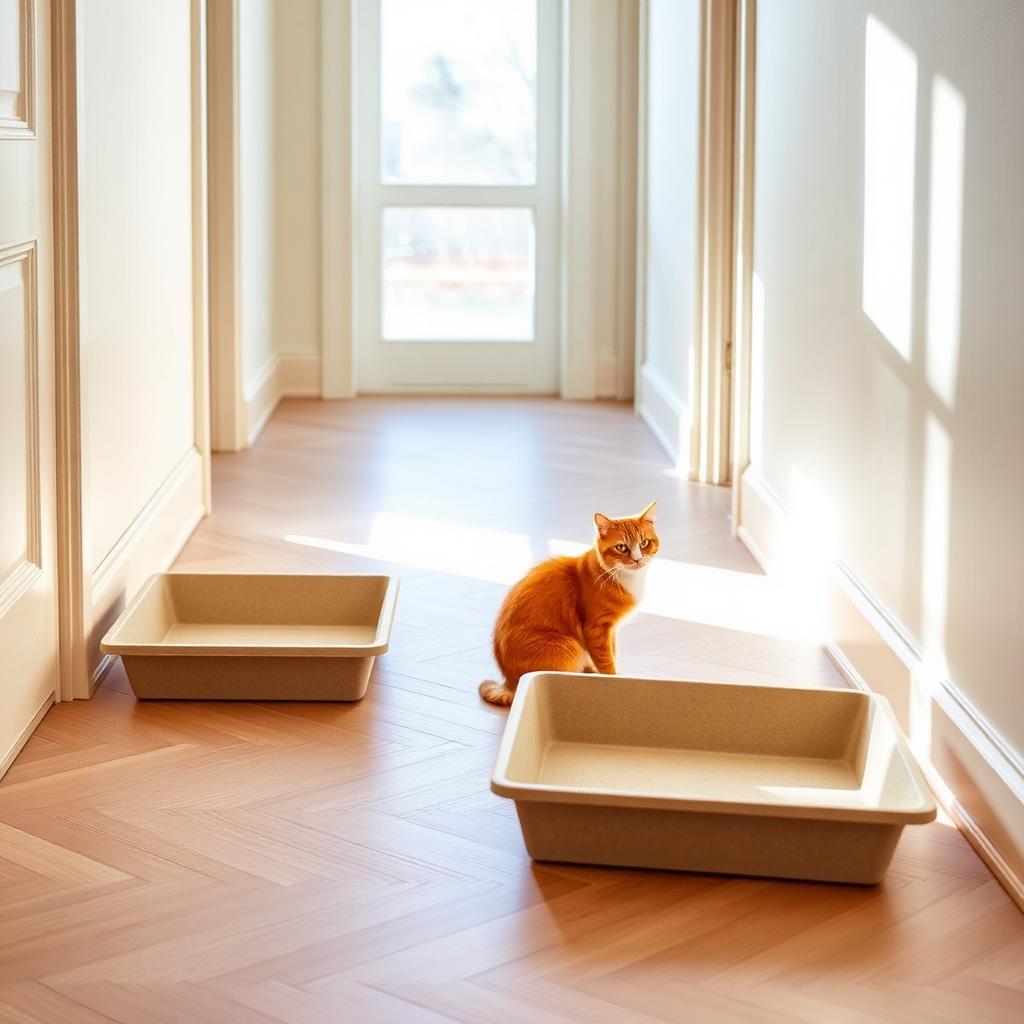
"A second litter box is not a luxury — it's the single easiest way to prevent 'accidents' before they start."
Where the cat + 1 rule comes from
The rule is straightforward: for every cat in the home, provide one litter box, then add one more. One cat needs two boxes. Two cats need three. Three cats need four. It sounds like overkill until you look at how cats actually use a toilet: they want choice, they want distance from resources they're guarding, and they want a fallback if one option is momentarily unavailable or unappealing.
Take away that choice and cats improvise — usually on a rug, a duvet or a potted plant. Most 'sudden' toileting problems aren't behavioural rebellion; they're a cat solving a resource problem the only way it can.
Why a single cat still benefits from two boxes
Cats are neat animals. If a box is already soiled, blocked, or feels wrong at that moment — a noisy washing machine started next to it, another pet is nearby, the litter is fresh out and smells unfamiliar — the cat needs somewhere else to go. Immediately. With one box only, the alternative is your floor.
A second box also acts as a diagnostic tool. If your cat suddenly uses only one and avoids the other, or splits urine and stools between boxes, that's useful information about health and preferences long before it becomes a vet visit.
When the +1 becomes non-negotiable
In multi-cat households, on multiple floors, in large apartments, and with senior cats or cats with mobility issues, the rule stops being a nice-to-have. Older cats shouldn't have to climb stairs at 3am to reach the only box. Cats living together often quietly guard resources — one confident cat can block another from using a shared toilet just by lying nearby.
The same applies during any period of stress: after a move, a new baby, a new pet, or during recovery from illness or surgery. An extra box adds resilience exactly when the household needs it most.
Placement matters as much as count
Two boxes side-by-side count as one box to a cat — they read the whole area as a single toilet zone. Split them across different rooms or floors, keep them away from food and water bowls, and choose spots that are quiet but not dead-end (a cat wants to see who's coming).
Low-traffic corners, hallways, utility rooms and bathrooms work well. Avoid placing a box next to a noisy appliance or right beside the front door.
The litter itself is part of the equation
Even three boxes won't help if the litter feels wrong. Cats reject dusty, strongly perfumed or coarse litters more often than owners realise. Natural, dust-free litters — wood pellets, paper-based, or fine wood-and-hay blends — sit closer to the forest-floor texture cats instinctively prefer, and they neutralise ammonia rather than mask it.
Pair a soft, natural litter with a disposable paper-pulp tray and the whole toilet is fresh from day one, without scrubbed plastic that traps odours and bacteria in micro-scratches over time.
One box vs cat + 1 setup
The behavioural difference between a single-box home and a cat + 1 home is bigger than most owners assume, especially in flats and multi-cat households.
| Situation | Cat + 1 setup | Only one box |
|---|---|---|
| Choice when a box is unavailable | Cat picks the second box | Cat picks a rug or sofa |
| Multi-cat resource guarding | Defused — nothing to guard | Confident cat blocks the others |
| Senior cats & mobility | A box on every floor | Long trips or accidents |
| Stress events (move, new pet) | Fallback already in place | New avoidance behaviours |
| Early health signals | Easier to spot changes per box | Everything mixes together |
| Owner cleaning effort | Similar — disposable trays lifted out | Same box scrubbed harder |
How to apply the cat + 1 rule in practice
- One cat → two boxes. Two cats → three boxes. Three cats → four boxes.
- Split boxes across different rooms or floors — never side-by-side
- Keep boxes away from food and water bowls
- Use a quiet, low-traffic spot with a clear line of sight
- For senior cats, put at least one box on every floor
- Pair with a dust-free natural litter for better acceptance
Frequently asked questions
Do I really need two litter boxes for one cat?
Yes, it's the setup behaviourists recommend. A single cat with two boxes has an alternative whenever one box is soiled, blocked or feels wrong at that moment — which is the single biggest cause of 'accidents' outside the box.
Can the two boxes just sit next to each other?
No. Cats read side-by-side boxes as one toilet zone. Split them across different rooms or floors so the cat has a genuine second option.
My cat only ever uses one — do I still need the second?
Yes. The second box is insurance: it's there for the moments when the first isn't usable. Many cats also quietly split urine and stools between two boxes once they have the choice.
Does the cat + 1 rule apply in a small apartment?
Especially there. In a small flat, cats can't easily walk away from a soiled box or a busy area. A second box in a different room gives them the escape they need.
Is a disposable tray a practical way to run cat + 1?
It's the easiest way. A disposable paper-pulp tray lifts out and goes into general waste or home compost, so running two or three fresh trays across the home doesn't add cleaning work.
Related articles
 Related articles
Not ready to enquire yet? These may answer your question first.
July 14, 2026

Best cat breeds for apartment living
Read the full article: Best cat breeds for apartment livingJune 30, 2026
The Best Disposable Cat Litter Box for Travel
Read the full article: The Best Disposable Cat Litter Box for TravelOctober 12, 2026
Bags for the cat litter box: which type fits — and when you need none
Read the full article: Bags for the cat litter box: which type fits — and when you need noneRun cat + 1 the easy way
Set up two or three fresh paper-pulp trays across the home — no scrubbing, no plastic, and a cat that never runs out of options.