
Litter box guide
Litter Box Liners: Do They Actually Work — and What Works Better?
Litter box liners are the most common attempt to avoid scrubbing a litter box: a plastic bag inside the tray that you lift out and dispose of. In practice most cats claw straight through them, urine seeps into the corners, and you still end up washing the box. Here's an honest look at when liners work, why they usually don't, and how a fully disposable biodegradable tray solves the same problem without the plastic bag.
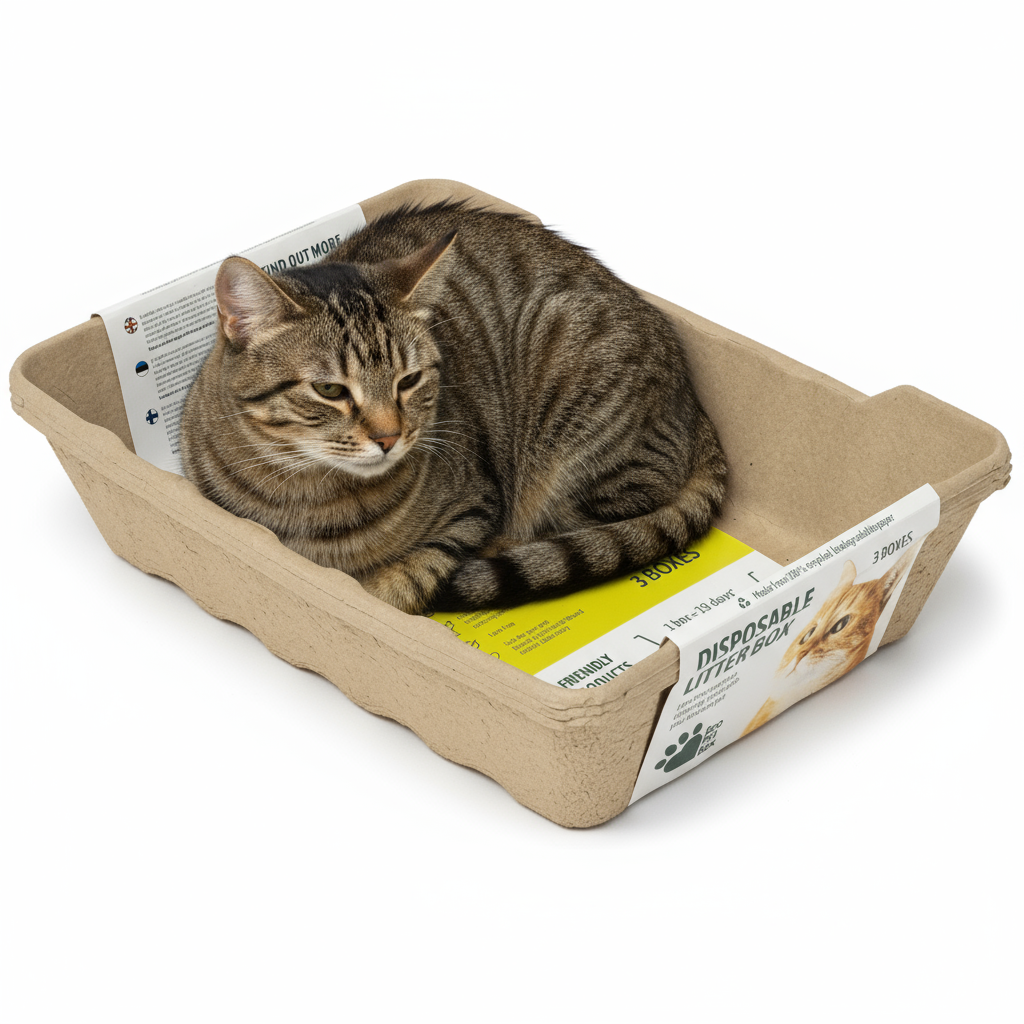
"A liner protects the plastic box. A disposable tray replaces it — that's the difference between less scrubbing and none."
What litter box liners are supposed to do
A litter box liner is a loose plastic (sometimes drawstring) bag that sits inside your plastic litter tray. You pour litter on top, and at the end of the week you gather the liner and dispose of it — in theory taking every soiled grain with it and leaving a clean box behind.
The promise is simple: no scooping stuck-on waste out of scratched plastic, no weekly wash, no bleach. Owners with several cats, bad backs, or a small apartment where the box lives in the bathroom are exactly the people who try them first.
Why liners fail in most households
Cats dig. Digging is not optional behaviour — it's how a cat covers scent and tests footing before using a tray. Claws that reach the bottom of the box also reach the liner, so a single enthusiastic dig puts holes in it. Once the liner is punctured, urine and clumping litter travel through and pool between the bag and the plastic, which is the worst possible place for it: you can't see it, you can't scoop it, and it is what makes the box smell within days.
The second failure is the seal. Liners bunch at the corners, litter works its way underneath, and lifting the bag out drags soiled litter across the rim. You are back to washing the box — often with the extra step of peeling a wet, torn bag out first.
Third, liners change how the surface feels underfoot. Some cats refuse a slippery, crinkling plastic base and start going next to the box instead, which is one of the more common triggers of litter box avoidance.
The waste maths nobody mentions
A liner is a single-use plastic bag. Used once a week, that's about 52 bags a year per cat — and you still own the plastic litter box underneath, which will eventually be scratched, stained and landfilled. So the liner adds plastic waste without removing any.
A disposable tray inverts that. The tray itself is the packaging, the box and the liner in one, made from moulded fibre with no PFAS, wax or plastic film, so the whole thing biodegrades in general household waste or home compost in 3–6 months. Dispose of it in household waste or compost — not in paper recycling, since it is contaminated and should not be recycled further.
How a disposable tray does the job a liner can't
EcoPetBox is a ready-to-use disposable litter tray made from multi-layer moulded fibre — no plastic box, no bag inside. When the tray is done, the tray leaves the house. There is nothing left behind to scrub, no seam for urine to hide in, and no bag to tear.
A set of three trays covers an average month for one cat (up to two months if you reuse trays that are still in good condition — check before each reuse). It works with any litter your cat already prefers, so nothing about their routine changes except the crinkling plastic they were digging through.
The surface is absorbent fibre rather than film, which feels more natural underfoot than a slippery liner — one reason cats that started avoiding a lined box usually settle straight back into a normal digging routine.
When a liner still makes sense
Liners are not useless. If you have a gentle, low-digging senior cat, a top-entry box where the litter bed is deep, or you only need a stop-gap for a weekend, a liner can genuinely save one wash. Heavy-duty liners with a thicker gauge survive longer than the thin supermarket kind.
But if you are buying liners specifically to stop scrubbing — the reason most people search for them — you are treating the symptom. The plastic box is the thing that needs cleaning, so removing the box is the fix.
Litter box liners vs a disposable tray
Both target the same job — get soiled litter out without cleaning a box. Only one removes the box from the equation.
| What matters | EcoPetBox disposable tray | Plastic liner in a plastic box |
|---|---|---|
| Survives digging and claws | Yes — rigid moulded fibre | Usually punctured within days |
| Scrubbing after removal | None — the tray leaves too | Box still needs washing |
| Urine pooling under a bag | No gap to pool in | Common once torn |
| Feel underfoot for the cat | Absorbent fibre, natural to dig | Slippery, crinkling film |
| Weekly single-use plastic | None | One bag per change |
| End of life | Biodegrades in 3–6 months | Bag and box both landfill |
| Bleach and chemical exposure | Not needed | Still part of the routine |
| Works with any litter | Yes | Yes |
Checklist: what you actually want from a liner replacement
- Nothing left to scrub after removal — not "easier" washing
- No plastic film for claws to puncture
- No hidden gap where urine can pool and smell
- A surface your cat will still dig in
- Works with the litter your cat already uses
- Disposes into household waste or home compost, no industrial facility needed
- No single-use plastic bag added every week
Frequently asked questions
Do cats scratch through litter box liners?
Most do. Digging to the base of the tray is normal cat behaviour, and a thin plastic liner rarely survives more than a few days of it. Once torn, urine passes through and collects between the liner and the box, which is exactly what creates odour.
Read the full articleAre litter box liners worth it?
They can save a wash for a gentle, low-digging cat or for short-term use. If your goal is to stop scrubbing the box altogether, a liner won't get you there — the plastic box underneath still needs cleaning.
Read the full articleWhat is the best alternative to litter box liners?
A fully disposable tray. Instead of protecting a plastic box with a bag, the tray itself is replaced, so nothing is left to wash. EcoPetBox trays are moulded fibre, PFAS-free, and biodegrade in 3–6 months.
Read the full articleDo you need a liner inside an EcoPetBox tray?
No — and we recommend against it. The tray is designed to be used directly with litter; adding a plastic liner reintroduces the tearing, pooling and plastic waste you were trying to avoid.
Read the full articleHow do I dispose of a used disposable tray?
Dispose of it in general household waste or home compost. Do not put it in paper recycling — it is contaminated and should not be recycled any further.
Read the full articleWill switching from a lined box upset my cat?
Usually the opposite. Cats that were avoiding a slippery, crinkling liner tend to settle quickly into an absorbent fibre tray. Keep the same litter and the same location and most cats use it on the first day.
Read the full articleRelated articles
 Related articles
Not ready to enquire yet? These may answer your question first.
August 10, 2026

EcoPetBox vs Kitty Poo Club: which disposable litter box fits your life?
Read the full article: EcoPetBox vs Kitty Poo Club: which disposable litter box fits your life?July 1, 2026
Sifting vs disposable litter box: which saves you time?
Read the full article: Sifting vs disposable litter box: which saves you time?July 1, 2026
Disposable litter box vs litter subscription: cheaper and cleaner?
Read the full article: Disposable litter box vs litter subscription: cheaper and cleaner?Skip the liner. Skip the scrub.
See the full EcoPetBox range — disposable litter trays, natural litter, biodegradable bowls and scoops — and stop buying plastic bags for a plastic box.