
Skip the Scrub.
The disposable litter box you change in under a minute.
EcoPetBox trays are pressed from recycled paper pulp: leak-resistant while in use, plastic-free and PFAS-free, and disposed of whole in general waste or home compost. No scooping the corners, no bleach, no plastic tub that smells a week after washing.
- Change time
- <1 min
- Per tray lasts
- ~7 days
- Plastic
- 0%
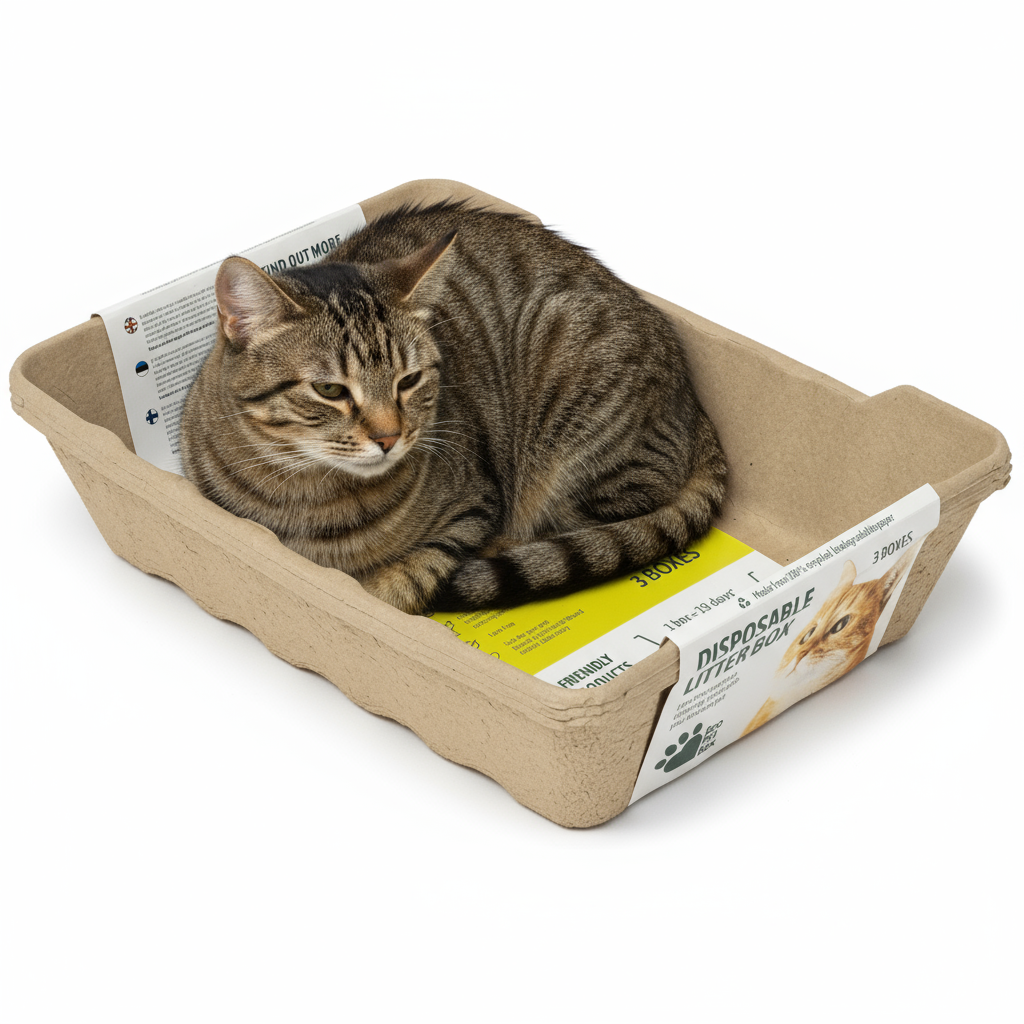
Why disposable
What a disposable litter box actually solves.
A plastic tray does not stay neutral. Claws and scoops leave micro-scratches, urine soaks into them, and the odour comes back faster after every wash. A disposable tray resets the surface instead of trying to rescue it.
Under a minute to change
Lift the tray out, dispose of it, set the next one down. No scooping the corners, no scrubbing, no drying.
Odour resets to zero
Plastic absorbs urine into micro-scratches, so smell returns faster after every wash. A new tray starts clean every time.
Plastic-free and PFAS-free
Pressed recycled paper pulp — no plastic liner, no fluorochemical coating, nothing to leach.
Breaks down in months
Dispose of it in general waste or home compost. A plastic tray takes centuries in landfill.
Kinder on hands and lungs
No bending over a tub with bleach — a real difference for arthritis, limited mobility or chemical sensitivity.
Cat-approved surface
Cats dig readily in the matte pulp surface; it feels natural rather than slick plastic.
How it works
Three steps, no cleaning products.
- 01
Set the tray down
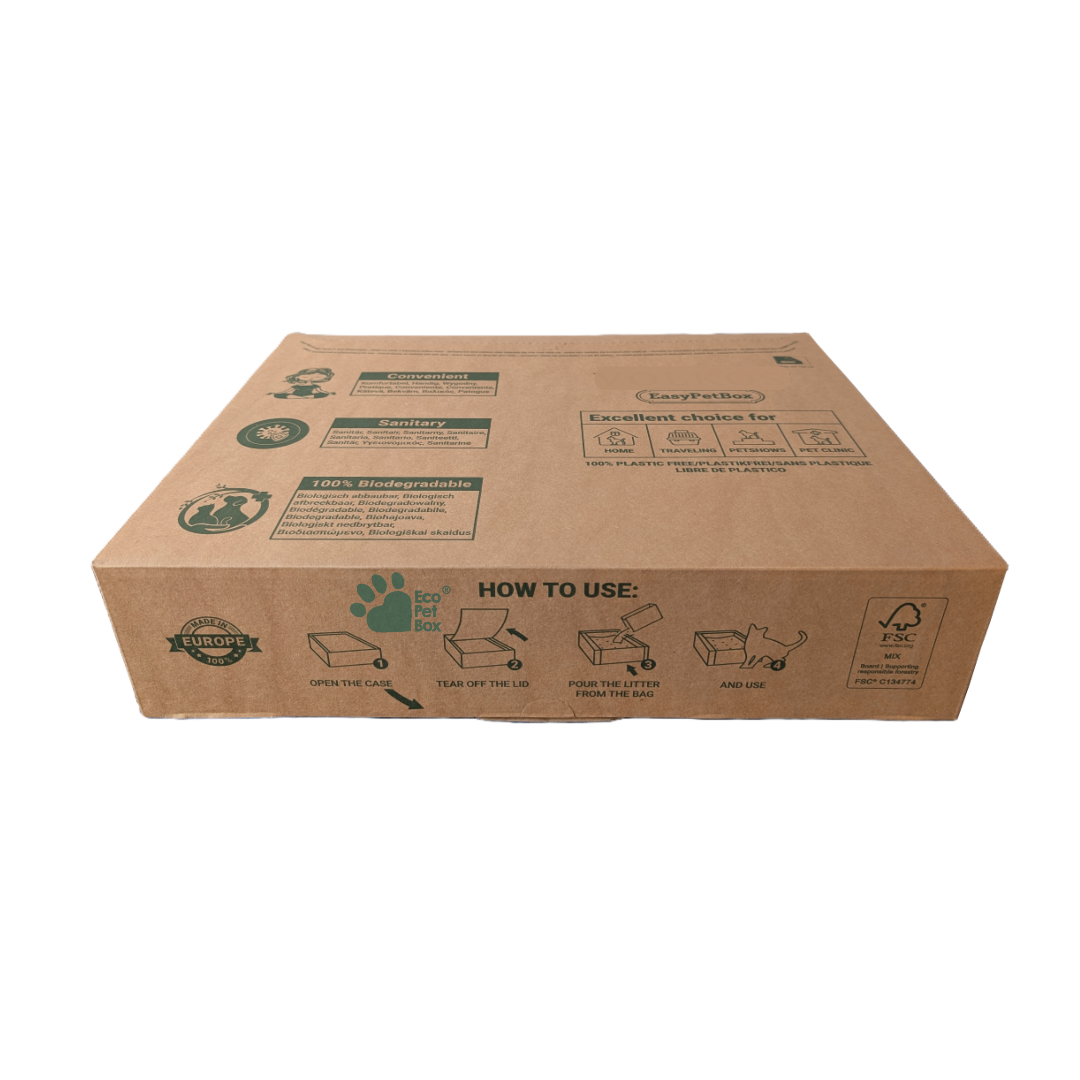
Take a tray from the flat-packed stack, place it where the old one was, and add your usual litter — or start with a pre-filled tray.
- 02
Use it for about a week
Scoop solids as normal if you like. The moulded walls hold wet litter for a full cycle without seams to leak through.
- 03
Dispose of the whole tray
Lift it out and dispose of it in general household waste or home compost. Not paper recycling — it is contaminated.
Compared
Disposable litter box vs the alternatives.
| Factor | EcoPetBox paper tray | Plastic tray | Cardboard box |
|---|---|---|---|
| Cleaning routine | Dispose and replace, under a minute | Weekly scrub with detergent or bleach | Dispose, but often after a day or two |
| Odour over time | Resets with every new tray | Returns faster as scratches deepen | Absorbs quickly, softens |
| Moisture resistance | Holds wet litter for a full cycle | Waterproof, but retains smell | Warps and leaks early |
| Digging resistance | Dense moulded wall, no reported claw-throughs | Scratches, then holds odour | Cats can dig through flat board |
| Material | Recycled paper pulp, PFAS-free | Virgin plastic | Corrugated board, often glued |
| End of life | General waste or home compost, months | Landfill for centuries | General waste or compost |
Want the detail? Read our comparisons of paper pulp vs cardboard, sifting vs disposable and disposable vs automatic litter boxes.
Still using plastic liners to keep your box clean? See why they tear, trap urine under the sheet and cost more over a year in litter box liners vs a disposable tray.
Who it is for
One tray, every situation.
Everyday home use
Replace the weekly deep-clean with a fresh tray. Same routine, none of the scrubbing.
Travel, RV and holiday rentals
A familiar bathroom set up in seconds, disposed of before you leave.
Vet clinics and recovery
Single-use hygiene after surgery, and no cross-contamination between patients.
Shelters, fosters and breeders
Trays are used in shelters running 20 to 50 cats — fresh surface per animal, no wash line.
Kittens and senior cats
Low entry walls, no heavy tub to lift, gentle on stiff joints.
Rabbits and small animals
The same tray works for rabbits, ferrets and other small pets prone to ammonia build-up.
Cost
What a disposable routine really costs.
A set of three EcoPetBox trays has an RRP of €14.59 — roughly three weeks for one cat. Against that, a plastic tray is not free: it needs replacing once it is scratched and odour-soaked, plus detergent, hot water and the time spent scrubbing it every week.
Most owners who switch describe the trade the same way: they pay a little more per week and get back the job they hated most.
Questions
Disposable litter box FAQ.
What is a disposable litter box?
A disposable litter box is a single-use tray you use for a period of time and then dispose of whole — no scrubbing, no bleaching, no plastic tub to keep. EcoPetBox trays are pressed from recycled paper pulp, hold litter without leaking, and go into general household waste or home compost when you are done.
How long does a disposable litter box last?
Around 7 days for one average adult cat with normal litter use. Multi-cat homes and heavy users should replace sooner. You are not limited to a fixed schedule: the point of a disposable tray is that you swap it the moment it stops feeling fresh.
Are disposable litter boxes leak-proof?
EcoPetBox trays are moulded so the walls and base form one piece, with no seams to leak through, and they are made to hold wet litter for a full use cycle without softening. They are not designed to hold standing liquid for weeks, which is exactly why they get replaced.
Will my cat scratch or dig through a disposable tray?
In practice, no. After selling hundreds of thousands of trays — including in shelters that run 20 to 50 cats — we have no reported case of a cat clawing through one. The moulded pulp wall is far thicker and denser than cardboard.
Are disposable litter boxes wasteful compared with a plastic tray?
Not over the life of the routine. A plastic tray is replaced every few months once it is scratched and odour-soaked, and then it is landfill for centuries. A paper-pulp tray is recycled fibre that breaks down in months, and it removes the water, detergent and bleach a plastic tray needs every week.
How do I dispose of a used tray?
General household waste or home compost. Do not put it in paper recycling — a used litter tray is contaminated and cannot be recycled further as paper.
Are disposable litter boxes good for travel, rentals and vet visits?
They are one of the best uses for them. The tray stacks flat, sets up in seconds in a hotel, holiday rental or RV, and is disposed of on departure — nothing wet goes back in the car. Clinics and foster carers use them for a guaranteed fresh surface per animal.
More answers on the full FAQ page.