
Materials
Why We Make Litter Boxes from Recycled Paper — Not Plastic
The materials in a litter box quietly decide almost everything: whether it leaks, whether it holds odour, whether your cat gets allergic reactions, and what happens to it after use. EcoPetBox is built from moulded recycled paper pulp for very specific reasons — and every one of them started with a rejected plastic prototype.
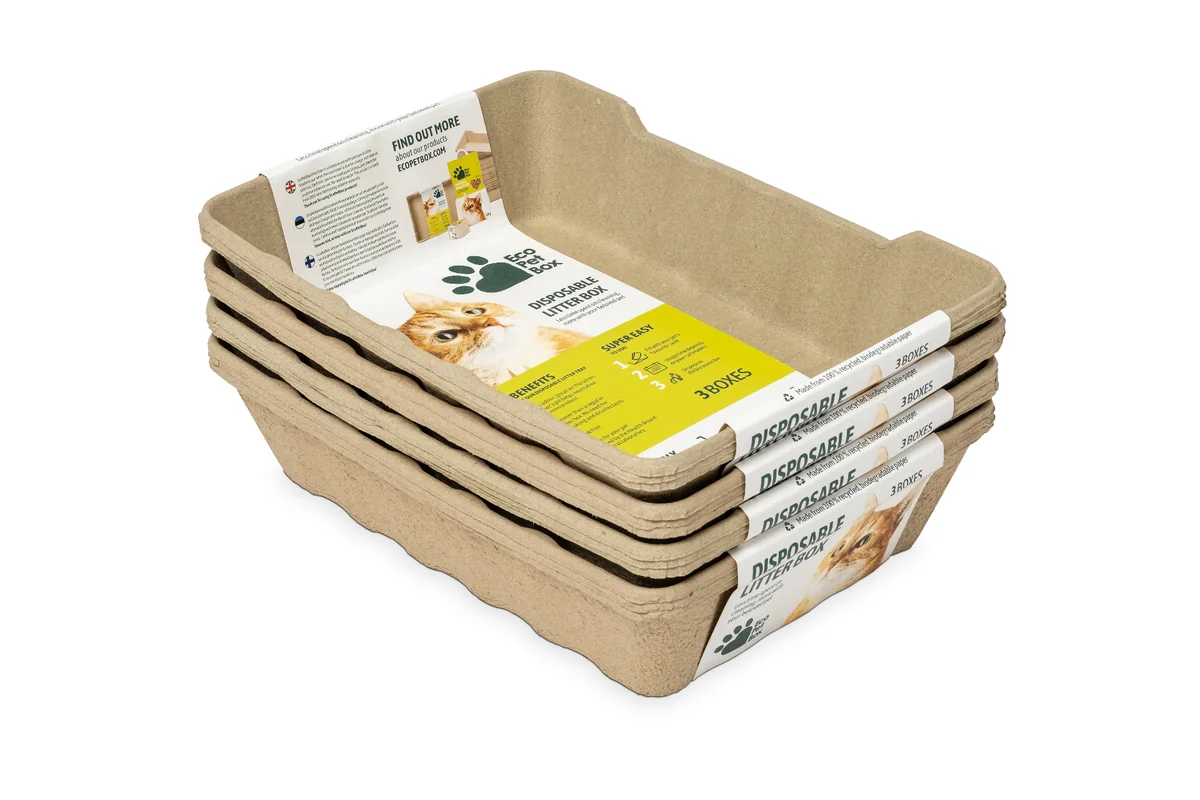
"Ours is convenient and made from biodegradable recycled paper — plastic simply doesn't offer these benefits."
What's wrong with plastic litter boxes
Plastic litter boxes have three failure modes owners rarely name out loud. First, they scratch — every scoop leaves micro-scratches that trap urine, faeces and bacteria that no amount of bleach fully removes. Second, they hold odour — plastic is porous at a molecular level, and after a few months the box itself smells regardless of the litter inside it. Third, they end up in landfill for hundreds of years, and many so-called "eco" plastic boxes are just recycled plastic that still can't biodegrade.
Why recycled paper actually works
Moulded recycled paper pulp is naturally rigid, absorbent and PFAS-free when we specify it correctly. It gives the tray a stable shape, holds up for the full litter cycle, and biodegrades in 3–6 months at end of life. The recycled paper fibres are compressed into a strong, leak-resistant shell that naturally controls odour.
It solves the plastic problem without introducing new ones: no micro-scratches to trap bacteria, no permanent odour, no landfill legacy. And because the material is food-grade at source, there are no harsh chemicals sitting next to your cat's paws.
The materials we said no to
Recycled plastic: still plastic. Doesn't biodegrade, still scratches, still holds odour. It reduces virgin plastic use but doesn't remove the problem.
Coated cardboard: works for a few days, then the coating fails or the cardboard collapses. Most coated cardboard trays on the market contain PFAS to control leakage — the same chemical class regulators are actively banning.
Pure bamboo pulp: excellent material, but supply is concentrated in a few regions and shipping it globally cancels the sustainability gain. We use bamboo in our litter blends where it makes sense, not for the tray itself.
How we prove it
Materials claims mean nothing without testing. Our trays and litters are tested at Intertek for PFAS content — the result is zero. Biodegradation is confirmed under normal disposal conditions (general household waste or home compost) at 3–6 months. The Green Product Award recognised the material choice specifically, and we publish material specs to distributors on request.
Why recycled paper beats plastic in a litter box
- No micro-scratches — no trapped bacteria
- No permanent plastic odour after a few months
- PFAS-free (Intertek tested)
- Biodegrades in 3–6 months, not centuries
- Safe for sensitive skin — no harsh chemicals needed to clean
- Works with every cat litter
Frequently asked questions
Isn't recycled plastic more sustainable than paper?
For a litter box, no. Recycled plastic still can't biodegrade, still scratches, still holds odour — it just uses less virgin plastic. Moulded recycled paper pulp removes the plastic entirely and breaks down in 3–6 months.
Read the full articleDoes a paper litter tray leak?
Not when it's engineered for it. Our trays are moulded (not folded coated cardboard) and hold up for the full litter cycle. Coated cardboard trays are what leak — usually because their coating fails or contains PFAS to compensate.
Read the full articleAre the materials really PFAS-free?
Yes — Intertek tested. PFAS-free means no per- and polyfluoroalkyl substances, the class of chemicals used in most coated cardboard trays and increasingly banned in the EU and US.
Read the full articleRelated articles
 Related articles
Not ready to enquire yet? These may answer your question first.
July 1, 2026

The best eco-friendly & biodegradable litter box in 2026
Read the full article: The best eco-friendly & biodegradable litter box in 2026July 1, 2026
Cardboard litter box: do they actually work?
Read the full article: Cardboard litter box: do they actually work?July 2, 2026
Why your plastic litter tray gets worse every month
Read the full article: Why your plastic litter tray gets worse every monthSee the material in action
Order a sample set of EcoPetBox trays and see the recycled paper construction for yourself.