
Disposable cat litter tray, set of 3
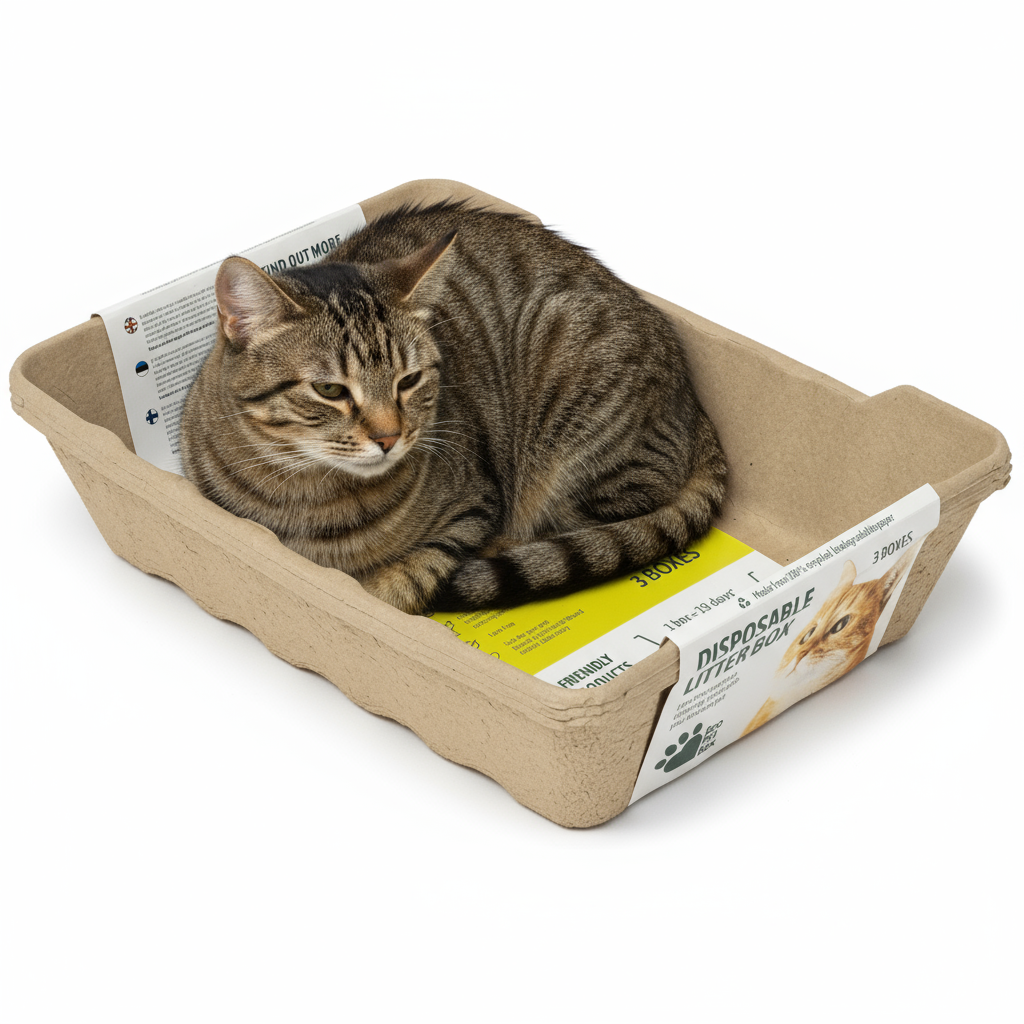
Pressed recycled paper pulp, plastic-free and PFAS-free. Around ten days per tray for one cat. RRP €14.59 for three; UK pricing is set on Amazon UK.
UK buyer's guide · 2026
Written for British homes — small flats, shared bathrooms, no outdoor tap and a general waste bin that goes out once a fortnight. Below: which litter tray suits which home, how wood litter compares with clay, what to look for in a scoop, and how to dispose of it all correctly under UK bin rules.
Step one
Measure the gap you actually have — beside the loo, under the basin, in the utility cupboard — then make sure your cat can turn a full circle inside the tray. Cats over 5 kg outgrow most supermarket trays.
Pressed recycled paper pulp. Used for around ten days by one cat, then disposed of whole — no scrubbing, no detergent, nothing stored under the sink. The best fit for small flats and shared bathrooms.
Best for: Flats, rentals, travel, anyone who hates scrubbing
Cheapest on the shelf and the most common tray in UK homes. Needs a weekly scrub, and once the surface is scratched it holds urine, so odour comes back faster after every wash.
Best for: Households happy to scrub weekly
Hides the tray but holds ammonia in still air, which is exactly what makes a cat go elsewhere. Also the slowest to clean because it has to come apart.
Best for: Looks, not performance
Usually £250–£600 plus proprietary refills, with motors, sensors and noise some cats never accept. A big spend for a job that takes a minute.
Best for: Tech-first households with the budget
Step two
Compressed softwood. Absorbs strongly, breaks down to sawdust, low dust and light to carry home. The UK's most popular natural litter and the one that pairs best with a paper tray.
A softer texture than pure pellets, which cats used to fine clay often accept more readily. Plant-based, plastic-free, no perfume.
Clumps well, but it is mined, heavy to carry up flat stairs, dusty, and cannot be composted. The heaviest option to buy in a city without a car.
Good odour control, but sharp underfoot for some cats and landfill-bound at the end. Often the priciest per month.
Switching litter? Mix a quarter of the new litter into the old for a week, then half, then all. Cats reject sudden changes far more often than they reject the litter itself.
Step three
UK specifics
British shops, vets and rescues all say litter tray. If you are comparing US reviews, translate: box means tray, and US sizes often run larger than what fits a UK bathroom.
Most UK bathrooms give you a corner beside the loo or a slot under a basin. Measure that gap first, then buy — a tray your cat cannot turn around in is the most common cause of accidents.
A used tray and its litter go in your general household waste bin, or a home compost heap for garden use only. Never the paper or card recycling bin, and not the council food waste caddy — used litter is contaminated.
Wood litter and a disposable tray leave no bleach smell, no stained bath and no plastic tub to hide at a viewing — useful when a landlord inspects.
Wood litter weighs a fraction of clay for the same absorbency, and a flat pack of three trays carries home on the bus.
The kit
Pressed recycled paper pulp, plastic-free and PFAS-free. Around ten days per tray for one cat. RRP €14.59 for three; UK pricing is set on Amazon UK.
Taller walls for enthusiastic diggers and over-the-edge sprayers, with one lower entry side for kittens and senior cats. RRP €15.99.
Plant-based, unperfumed, low dust. A softer texture than plain pellets for cats switching off clay. RRP €11.59.
Compressed softwood pellets for strong absorbency and odour control. RRP €9.29.
Moulded fibre, wide-headed, disposed of with the tray. RRP €1.69.
Trays, litter, bowls and a scoop in one box — the simplest way to set up a new cat or a rental. RRP €28.99.
Prices shown are recommended retail prices in euros, valid until 30.09.2026. UK marketplace prices are set by the retailer.
Read next
FAQ
For most UK homes the best litter tray is the one that actually gets cleaned. In a flat with a shared bathroom and no outdoor tap, that favours a disposable paper-pulp tray: you dispose of the whole tray in under a minute, with no detergent, no bleach and no plastic tub stored under the sink. If you are happy to scrub weekly, an open plastic tray with high sides and one low entry side is the next best thing.
No, only the wording. Litter tray is standard British usage; litter box is American. UK searches for litter tray run roughly 9,900 a month, so British listings and reviews almost always use tray.
Bag it and put it in your general household waste bin. Wood-based litter can also go on a home compost heap used for ornamental garden beds only, never for food crops. Do not put used litter or a used paper tray in paper or card recycling, and do not use the council food waste caddy.
Usually yes. It is far lighter to carry home without a car, produces less dust in a small room, is unperfumed, and breaks down instead of going to landfill. Cats used to fine clay sometimes prefer a wood-and-hay blend to plain pellets for the first switch.
Roughly 8–12 litres of wood litter a month for one indoor cat, depending on tray size and how thoroughly you scoop daily. A set of three disposable trays covers about a month for one cat.
Yes — the range is on Amazon UK, with the disposable tray set stocked directly. Prices there are set by the marketplace; the figures on this page are recommended retail prices in euros.
A plastic tray should be replaced once the surface is visibly scratched, usually within a year, because the micro-scratches hold urine and odour returns faster after each wash. A disposable paper tray is replaced as part of the routine, around every ten days of standard single-cat use.
EcoPetBox trays are pressed from recycled paper pulp — plastic-free, PFAS-free, and disposed of whole in your general household waste bin or home compost. Available on Amazon UK.