
Best overall for a no-scrub routine
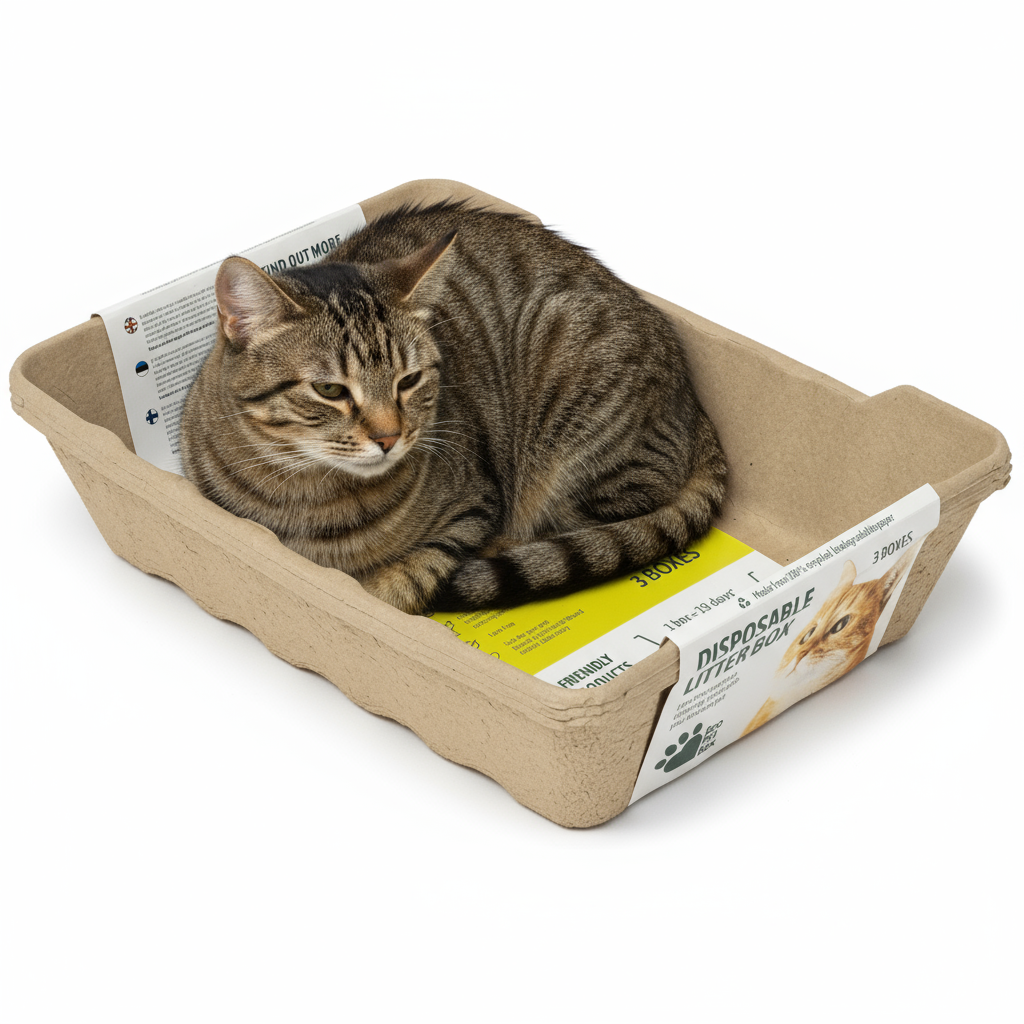
Disposable paper-pulp tray
Dispose and replace in under a minute. No detergent, no bleach, no stored tub. €14.59 RRP for a set of three.
Buyer's guide · 2026
There is no single best litter box — there is the best one for a Maine Coon, for a studio flat, for a digger, for a rental, for arthritic hands. Below: the six things worth judging a box on, a pick for each situation, and the setups to avoid. A set of three EcoPetBox trays is €14.59 RRP and needs no scrubbing at all.
How we judge
A cat should be able to turn a full circle without touching the walls. Most trays sold as standard are too small for cats over 5 kg; large breeds need roughly 1.5× body length.
High walls contain digging and over-the-edge spraying. One low entry side keeps it usable for kittens, seniors and arthritic cats.
A box is only as good as it smells in month six. Plastic develops micro-scratches that soak up urine, so odour returns faster after every wash. A disposable tray resets to zero.
Count the minutes honestly: scoop plus a weekly scrub with detergent, versus disposing of a whole tray in under a minute.
Cheap plastic gets replaced yearly; automatic units run €300–700 plus refills. Compare on three-year cost, not the shelf price.
Plastic goes to landfill for centuries. Pressed paper pulp is plastic-free and PFAS-free and goes into general household waste or home compost — never paper recycling, since a used tray is contaminated.
The picks
Best overall for a no-scrub routine
Dispose and replace in under a minute. No detergent, no bleach, no stored tub. €14.59 RRP for a set of three.
Best for large cats (Maine Coon, Ragdoll, Norwegian Forest)
Big cats need length before they need depth. Most cabinets and hooded boxes cut the usable floor area exactly where a large cat needs it.
Best for small apartments
An enclosure hides the box but concentrates ammonia. In a small flat, ventilation matters more than concealment.
Best for enthusiastic diggers
Corrugated board delaminates when wet; pressed pulp does not. Across hundreds of thousands of trays, including shelters running 20–50 cats, we have no reported case of a cat clawing through.
Best for travel, RV and Airbnb
Arrives ready to use, dispose of it before you leave. Nothing to wash in a rental sink.
Best for multi-cat homes
Sharing is the most common cause of litter box avoidance. Disposable trays make the plus-one rule affordable to actually follow.
Best for arthritis, limited mobility or chemical sensitivity
No lifting a loaded tub to a bath, no bending over a scrub brush, no bleach fumes. A change takes under a minute.
Best hygiene for clinics, shelters and recovery
No cross-contamination between animals and nothing to disinfect between uses.
Think twice
They trap ammonia in still air and are the single most common reason a cat starts going elsewhere.
Claws tear them, urine pools underneath, and you still wash the tub.
Several hundred euros plus proprietary refills, motors and sensors that fail, and noise that some cats never accept.
FAQ
For most households the best litter box is the one that gets cleaned reliably. That favours an open tray with high walls and one low entry side. If scrubbing is the part you skip, a disposable paper-pulp tray removes the task entirely: you dispose of the whole tray in under a minute and start from a clean surface every time.
Roughly 1.5× the length of your cat from nose to base of tail, with enough width to turn around without touching the sides. Cats over 5 kg usually outgrow the standard trays sold in supermarkets.
They look tidier but perform worse. A hood or cabinet holds ammonia in still air, so the box smells stronger to your cat than to you, and it has to be disassembled to clean. Covered boxes are a frequent cause of litter box avoidance.
A plastic tray should be replaced once its surface is visibly scratched — usually within a year — because the micro-scratches hold urine and odour returns faster after every wash. A disposable paper tray is replaced as part of the routine, around every ten days of standard single-cat use.
High walls and a material that stays rigid when wet. Pressed moulded fibre holds up where flat corrugated cardboard soaks through, and it gives diggers a matte, natural surface rather than slick plastic.
Over three years the gap is smaller than people expect once you count replacement plastic trays, liners, detergent and bleach — and a set of three EcoPetBox trays is €14.59 RRP, covering around a month for one cat.
Look for renewable material, no PFAS, wax or plastic film, and breakdown in the waste system you actually have. EcoPetBox trays are plastic-free pressed paper pulp and biodegrade in 3–6 months in general household waste or home compost.
EcoPetBox trays are pressed from recycled paper pulp — plastic-free, PFAS-free, and disposed of whole in general household waste or home compost. €14.59 RRP for three.