
Materials guide
Cardboard Litter Box: Do They Actually Work?
"Cardboard litter box" is one of the most searched terms in disposable cat care — and one of the most misunderstood. Standard cardboard leaks. Coated cardboard adds plastic. So how does a biodegradable cardboard-style litter tray actually hold up in daily use? Here's what to look for, what to avoid, and how EcoPetBox is engineered differently.
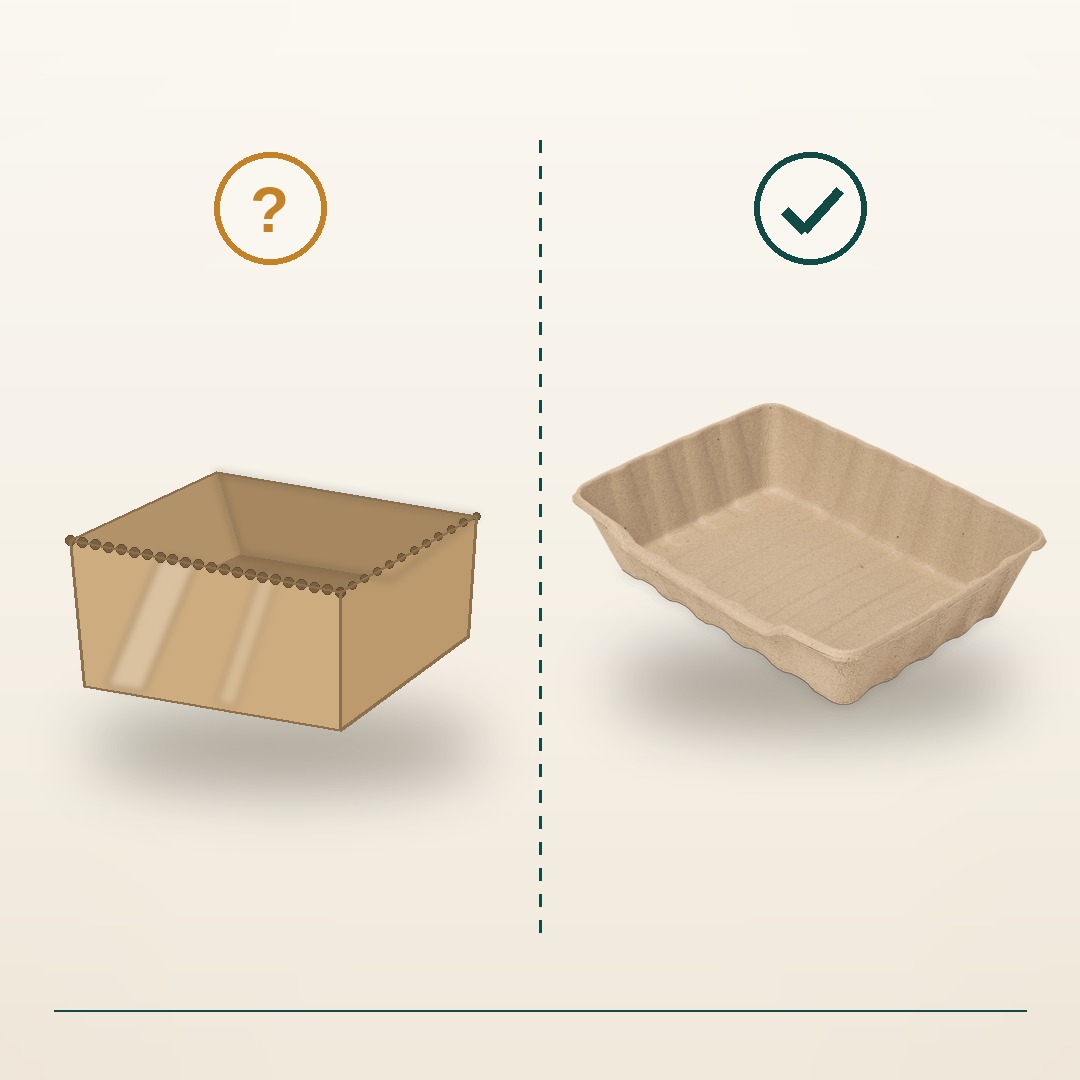
"The question isn't whether cardboard works. It's which cardboard, coated with what, tested for how long."
Why cardboard litter boxes appeal to owners
A cardboard litter box is disposable by nature: use it, replace it, no scrubbing, no plastic tub to store. It's the fastest way to eliminate the single most hated chore in cat ownership and to remove plastic from the litter corner.
Owners also switch to cardboard for hygiene reasons. Plastic litter trays scratch, and micro-scratches trap urine, bacteria and odour that no bleach really removes. A fresh cardboard tray every cycle is bacteriologically closer to a hospital single-use approach than to a scrub-and-reuse plastic box.
The problem with cheap cardboard litter trays
Plain corrugated cardboard has no defence against liquid. Within hours it softens; within a day it can leak. That's why many low-cost cardboard litter boxes on the market are coated with a thin plastic or wax film — which technically keeps them dry but destroys the biodegradability that made cardboard attractive in the first place.
Others are so thin the tray collapses when you pick it up to dispose. A good disposable litter tray needs to hold weight, hold liquid, resist scratching, and still break down at end of life. That's an engineering problem, not a materials question.
How EcoPetBox is built differently
EcoPetBox uses a multi-layer moulded fibre construction — closer to industrial packaging than to a shipping box. It's rigid, leak-resistant for the full life of the tray, uncoated with any plastic film, and PFAS-free. Every tray fully biodegrades in general waste or home compost within 3–6 months.
A set of three trays covers an average supply of one month, or up to two months when you reuse trays that are still in good condition. Works with every cat litter — wood, corn, clumping clay, silica or bamboo — so you don't have to change what your cat already prefers.
Cardboard litter box vs EcoPetBox moulded-fibre tray
Not all disposable litter trays are equal. The construction determines whether it survives a week of use.
| Feature | EcoPetBox | Cheap cardboard litter box |
|---|---|---|
| Leak resistance | Full life of the tray | Softens within 24h |
| Plastic / wax film | None — PFAS free | Usually coated |
| Biodegradable | Yes, 3–6 months | Only if uncoated |
| Rigidity when full | Holds shape when lifted | Bows and tears |
| Odour control | Locks with natural litter | Absorbs into fibres |
| Home compost safe | Yes (uncontaminated) | No |
What to look for in a disposable cardboard-style litter tray
- Multi-layer moulded fibre, not single-wall corrugate
- Leak-resistant without a plastic or wax coating
- PFAS-free (confirmed by the manufacturer)
- Designed to last as long as your litter; can often be reused 1–2 times if still clean, dry and structurally sound
- Fully biodegradable at end of life
- Compatible with the litter your cat already uses
Frequently asked questions
Do cardboard litter boxes leak?
Uncoated single-wall cardboard will leak within a day. Multi-layer moulded fibre trays like EcoPetBox are engineered to stay leak-resistant for the full litter cycle without any plastic film.
Read the full articleAre cardboard litter boxes really biodegradable?
Only if they aren't coated with plastic or wax. EcoPetBox is PFAS-free and fully biodegrades in 3–6 months in general waste or home compost.
Read the full articleHow long does a cardboard litter box last?
The tray itself lasts as long as your litter. EcoPetBox basically mirrors your current litter-changing schedule: if your litter needs changing every 10 days, change it every 10 days; if once a month, then once a month. We also recommend checking the tray before disposing of it, as it can usually be reused 1–2 times if it is still clean, dry and structurally sound.
Read the full articleRelated articles
 Related articles
Not ready to enquire yet? These may answer your question first.
July 2, 2026

Why we make litter boxes from recycled paper — not plastic
Read the full article: Why we make litter boxes from recycled paper — not plasticJuly 2, 2026
Why your plastic litter tray gets worse every month
Read the full article: Why your plastic litter tray gets worse every monthJuly 2, 2026
The science of litter tray odour: why some materials trap it and others reflect it
Read the full article: The science of litter tray odour: why some materials trap it and others reflect itTry a properly engineered disposable tray
See EcoPetBox — the biodegradable, PFAS-free disposable litter tray designed to last the full cycle without leaking.