
Durability
Will My Cat Scratch Through an EcoPetBox Tray? What Diggers & Large-Cat Owners Should Know
If your cat is a digger, a large breed, or simply enthusiastic about burying, you've probably wondered whether a disposable fibre tray can survive those claws. The short answer: in normal use, cats do not claw through EcoPetBox trays. After selling hundreds of thousands of units we have no recorded case of a cat scratching through — and our trays are used in animal shelters housing 20–50 cats per room without that feedback either. Here's why the material holds up, what scratching behaviour actually does, and how to get the most from a tray with a heavy scratcher.
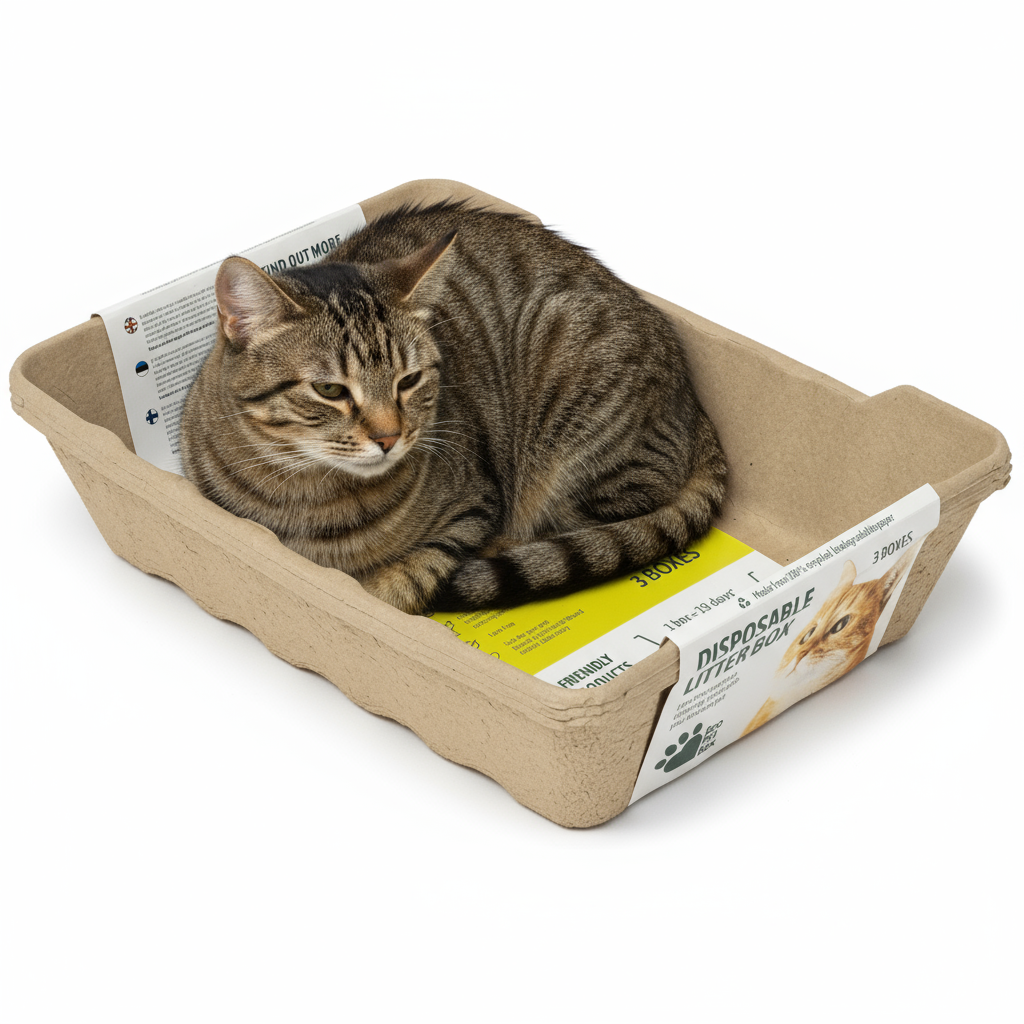
"Hundreds of thousands of trays sold, rooms with 20–50 cats — and we still have not heard of a cat scratching through."
Why 'scratching through' is rare with moulded fibre
EcoPetBox trays are made from compressed, multi-layer moulded fibre — not the thin folded cardboard you might picture. The recycled paper pulp is pressed into a rigid, absorbent shell that holds its shape under the weight of litter and cat. That compression matters: a cat's claws meet a dense, interlocked fibre surface rather than a loose sheet.
Most scratching in a litter box is surface behaviour. Cats rake through the litter to cover waste; they aren't usually applying sustained downward pressure to the tray base itself. Even enthusiastic diggers mainly redistribute litter, and the litter itself absorbs the abrasion before the tray does.
What 'diggers' are actually doing
A digger isn't trying to pierce the tray. The behaviour is about burying scent: pawing, turning, and pushing litter to create a soft covering. The claws spend most of their time in the litter layer, not pressing against the tray floor.
When a cat does reach the base, it's usually a brief scrape rather than a concentrated clawing session. Moulded fibre is engineered to handle exactly that — normal litter-box use, including daily scooping and covering, for the full replacement cycle.
The shelter test: real proof at scale
The strongest evidence isn't from a lab — it's from animal shelters. EcoPetBox trays are used in shelter rooms with 20–50 cats, often with no selection for gentle users and with staff changing trays on tight schedules. In that high-traffic environment we have not received feedback of cats scratching through.
That matters because shelters are a durability stress test: more claws, more waste, more frequent use, and less time for careful placement. If the trays hold up there, they will almost certainly hold up in a typical home with one to three cats.
Large cats and heavy paws
Large breeds such as Maine Coons and Ragdolls weigh more, but their claws aren't proportionally thicker or sharper than those of an average cat. The tray base is designed to support the weight of a large cat moving, turning, and digging inside it.
For big cats the real consideration is usually replacement frequency, not claw damage. A Maine Coon produces more urine and shifts more litter, so a tray may need replacing sooner. The benefit is that you get a fresh, unscratched surface each cycle — rather than a plastic box whose scratches deepen and trap odour over time.
EcoPetBox vs. cardboard and plastic alternatives
Not every disposable tray is built the same. The material and construction determine how well it survives a determined digger — and what happens to it afterwards.
| Concern | EcoPetBox | Typical alternative |
|---|---|---|
| Scratch resistance | Compressed moulded fibre, multi-layer | Thin cardboard can tear; plastic scratches permanently |
| Dig-out containment | High sides contain litter scatter | Varies — low sides common |
| End of life | Biodegrades in 3–6 months | Cardboard: often coated; plastic: landfill for centuries |
| Hygiene with heavy use | Fresh tray each cycle | Scratched plastic traps bacteria and odour |
| Large-cat suitability | Supports weight; replace more often if needed | Plastic totes are heavy; cardboard may sag |
Why EcoPetBox trays hold up to enthusiastic scratchers
- Made from compressed, multi-layer moulded fibre — not thin cardboard
- Recycled paper pulp is pressed into a rigid, absorbent shell
- High sides help contain dig-out and litter scatter
- Engineered for the full litter cycle, including heavy daily use
- Proven in multi-cat shelter rooms with 20–50 cats
- If condition weakens, simply replace — no scrubbing required
Frequently asked questions
Will my cat scratch through the bottom of the tray?
In normal use, no. EcoPetBox trays are made from compressed moulded fibre engineered to last the full litter cycle. After selling hundreds of thousands of trays, we have no recorded case of a cat scratching through.
What about large cats like Maine Coons?
Large cats are well supported. Their weight is distributed across the rigid tray base, and the high sides contain dig-out. You may replace trays more often simply because big cats produce more waste, not because of claw damage.
Are the trays strong enough for animal shelters with many cats?
Yes. Our trays are used in shelter rooms with 20–50 cats. That high-traffic environment has not produced feedback of cats scratching through.
My cat is a digger — should I add extra litter?
Use the recommended 3–5 cm of litter. This gives your cat enough material to bury without repeatedly reaching the tray base. Place the tray on a flat, stable surface so it doesn't shift during digging.
How do I know when to replace the tray?
Replace when you notice soft spots, heavy staining, or any wear you're not comfortable reusing. Most households replace every 1–2 weeks per tray, sooner in multi-cat homes.
Related articles
 Related articles
Not ready to enquire yet? These may answer your question first.
July 13, 2026

The future paper napkin: why disposable trays will replace plastic tubs
Read the full article: The future paper napkin: why disposable trays will replace plastic tubsJuly 7, 2026

Is EcoPetBox good for travel, RV, Airbnb & temporary use?
Read the full article: Is EcoPetBox good for travel, RV, Airbnb & temporary use?July 7, 2026

Easier litter box for arthritis, disabilities & chemical sensitivity
Read the full article: Easier litter box for arthritis, disabilities & chemical sensitivitySee the tray that stands up to real cats
Order a sample set or shop the range — and see why hundreds of thousands of cat owners and shelter managers trust EcoPetBox.