Cat health
Disposable vs. Ceramic Cat Bowls: Which is Better for Your Cat's Health?
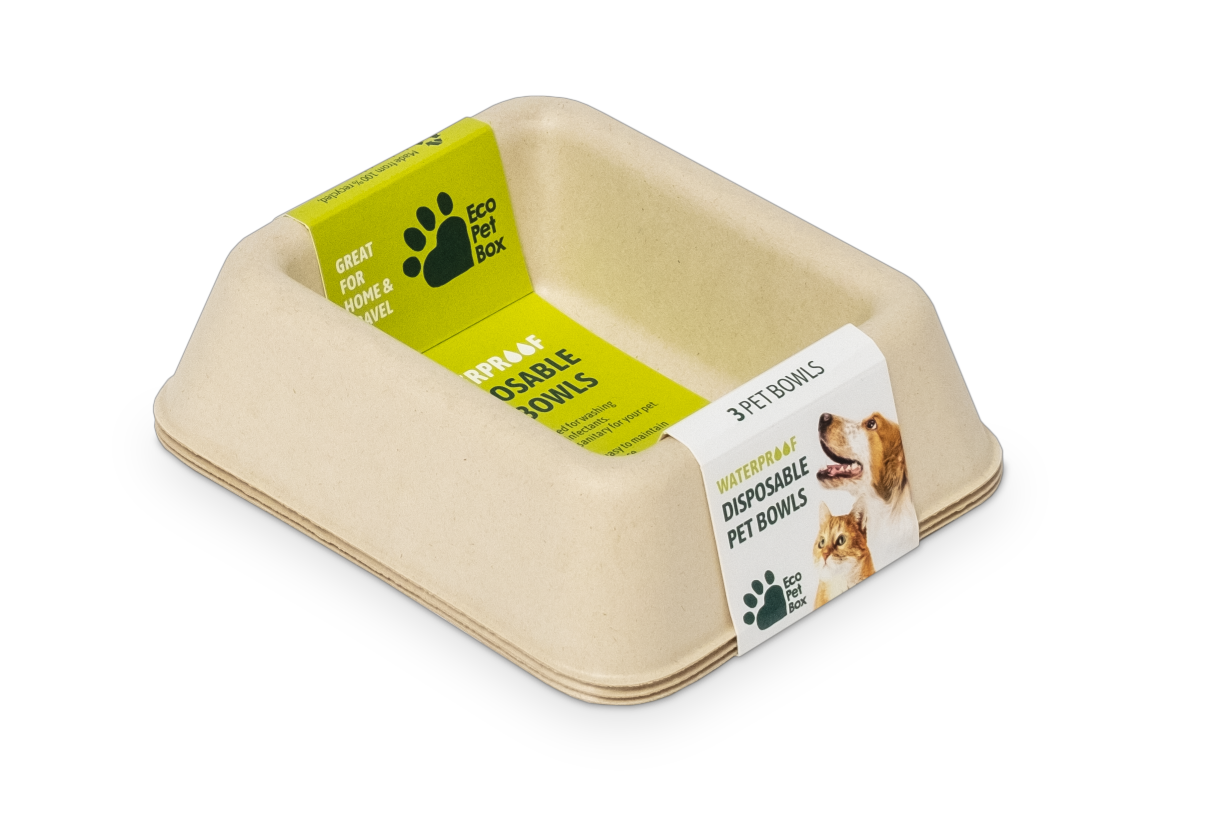
Ceramic bowls look premium and last forever — but the glaze cracks, the surface scratches, and the tiny fissures fill with bacteria, food oil and saliva. Plastic is worse. EcoPetBox's moulded pulp bowls flip the equation: cheap enough to replace, smooth enough to stay clean, and compostable at the end of a few days. Here is how the two really compare on hygiene, safety, travel and cost.
"Any bowl a cat eats from every day is a bacterial surface. The question is how often you can honestly reset it."
The hidden bacteria problem in ceramic and plastic bowls
A 2011 NSF study of household surfaces put the family pet bowl at number four for bacteria — dirtier than the toilet seat. Ceramic bowls arrive smooth, but the glaze is thin. Every drop into the sink, every scrape with cutlery, every dishwasher cycle adds hairline cracks. Those fissures hold food oil, saliva and biofilm, and household detergent doesn't reach the bottom of them. Plastic bowls develop the same micro-scratches faster and are the most cited cause of feline chin acne by VCA, PetMD and Veterinary Partner.
The problem isn't that ceramic is bad — it's that a bowl your cat licks twice a day accumulates load faster than a home routine can reset it. Even a daily hot wash leaves a rim film. After a few months, that film is what your cat is actually eating off.
Why moulded pulp bowls stay hygienic
EcoPetBox bowls are pressed from recycled paper pulp. The surface is smooth and non-porous for the working life of the bowl, and there is no working life beyond a few days — you replace it before biofilm has a chance to form. There are no cracks to hide bacteria, no glaze to chip, and no detergent residue on the rim, because most owners rinse with hot water and swap.
Because a bowl costs a fraction of a ceramic one, rotating a fresh bowl every 2–3 days is normal, not extravagant. The chin never touches the same surface twice for long. For cats with skin sensitivity, that alone is often the difference between clear and inflamed.
Travel, RVs, Airbnbs and temporary care
Ceramic bowls are heavy, breakable and hard to sanitise on the road. A moulded pulp bowl weighs almost nothing, stacks flat in a suitcase, and needs no washing at destination — you use it, dispose of it in general waste or home compost (not paper recycling; it is contaminated), and open a new one at the next stop. Vets, groomers, cat sitters, cat hotels and Airbnb hosts use them for the same reason: guaranteed fresh surface per animal, no cross-contamination, no dishwashing between guests.
For a foster litter or a vet clinic waiting area, that guarantee is a hygiene protocol, not a convenience. Ceramic can be sterilised in theory; in practice it rarely is between animals.
Cost and end-of-life honestly compared
A quality ceramic bowl costs €10–25 and lasts until it chips. An EcoPetBox bowl costs roughly €0.50–1 depending on pack size. Rotating every 2–3 days works out to about €5–8 per month per cat — less than one broken ceramic bowl per year. When the ceramic bowl chips, it goes to landfill (glazed ceramic is not recyclable in most municipalities). When the pulp bowl is done, it goes to general waste or home compost and breaks down in a few months.
The honest comparison isn't 'disposable = wasteful.' A single pulp bowl weighs about 15 g. A single chipped ceramic bowl weighs 400 g of unrecyclable landfill. Over a cat's lifetime, the pulp routine is the lower-impact one by a wide margin.
Disposable pulp vs. ceramic cat bowl, factor by factor
How each type performs on the things that actually affect your cat's health.
| Factor | EcoPetBox pulp bowl | Ceramic bowl |
|---|---|---|
| Bacteria after 48 hours | New bowl — reset to zero | Builds up in glaze fissures |
| Surface after 6 months | Not applicable — replaced | Micro-cracks trap food oil |
| Chin contact irritation | Shallow, minimal contact | Rim residue can flare acne |
| Detergent residue risk | None — hot-water rinse or swap | Common in dishwashed bowls |
| Weight and portability | About 15 g, stacks flat | 300–500 g, breakable |
| Suitable for travel, RV, Airbnb | Yes — use once and dispose | Awkward, needs washing on site |
| Cost per month per cat | €5–8 with 2–3 day rotation | €10–25 upfront, replaced when chipped |
| End-of-life | General waste or home compost, 3–6 months | Landfill — glazed ceramic not recyclable |
Choosing between ceramic and disposable — quick checklist
- Cat with chin acne or skin sensitivity: switch to disposable pulp today
- Multi-cat household: disposable removes cross-contamination between bowls
- Travel, RV, Airbnb or vet visit: disposable, no washing at destination
- Fostering or short-term care: fresh bowl per animal, no risk of carried infection
- Long-term home use: rotate a fresh pulp bowl every 2–3 days
- Dispose of used bowls in general waste or home compost — not paper recycling
- Keep one ceramic bowl only if it is used and sterilised daily
Frequently asked questions
Are ceramic bowls actually safe for cats?
Ceramic is safer than plastic, but only while the glaze is intact. Once it chips or crazes, bacteria and food oil settle into the cracks and household washing does not reach them. If you use ceramic, inspect the rim monthly and replace at the first sign of damage.
Read the full articleIsn't a disposable bowl wasteful compared to reusable ceramic?
Not over a cat's lifetime. A pulp bowl is about 15 g of recycled paper that composts in months. A chipped ceramic bowl is 400 g of unrecyclable landfill. The pulp routine is the lower-impact one by a wide margin — and it does not require detergent, hot water, or a dishwasher cycle per wash.
Read the full articleHow often should I replace a disposable cat bowl?
Every 2–3 days for a healthy adult cat. Daily during chin acne recovery. After every animal in a fostering or vet setting. Rinse with hot water between fills if needed.
Read the full articleWhere should I dispose of used pulp bowls?
General household waste or home compost. Do not put them in paper recycling — the bowl is contaminated with food and saliva and cannot be recycled further as paper.
Read the full articleAre moulded pulp bowls safe for wet food and water?
Yes. EcoPetBox pulp bowls are moulded to hold both dry and wet food and short-term water. They are made from food-grade recycled paper without PFAS or plastic coatings.
Related articles
 Related articles
Not ready to enquire yet? These may answer your question first.
September 4, 2026

Square by design: why EcoPetBox pet bowls aren't round
Read the full article: Square by design: why EcoPetBox pet bowls aren't roundJuly 13, 2026
Cat not using the litter box? A complete guide to causes and fixes
Read the full article: Cat not using the litter box? A complete guide to causes and fixesJuly 7, 2026
Is EcoPetBox good for travel, RV, Airbnb & temporary use?
Read the full article: Is EcoPetBox good for travel, RV, Airbnb & temporary use?Bowls that stay clean because you replace them
Shop EcoPetBox moulded pulp bowls — smooth, non-porous, compostable, and light enough to keep a stack at home and on the road.