
Cat health
Cat Chin Acne and Plastic Bowls: Why Switching Bowls Can Clear It Up
Cat chin acne — those tiny black specks or red bumps under your cat's chin — is one of the most common skin conditions vets see, and one of the most commonly linked to a single household object: the plastic food or water bowl. VCA, PetMD and Veterinary Partner all list plastic bowls as a leading trigger. Two scenarios matter here: preventing chin acne in the first place, and helping a cat recover from it faster. EcoPetBox biodegradable bowls solve both.
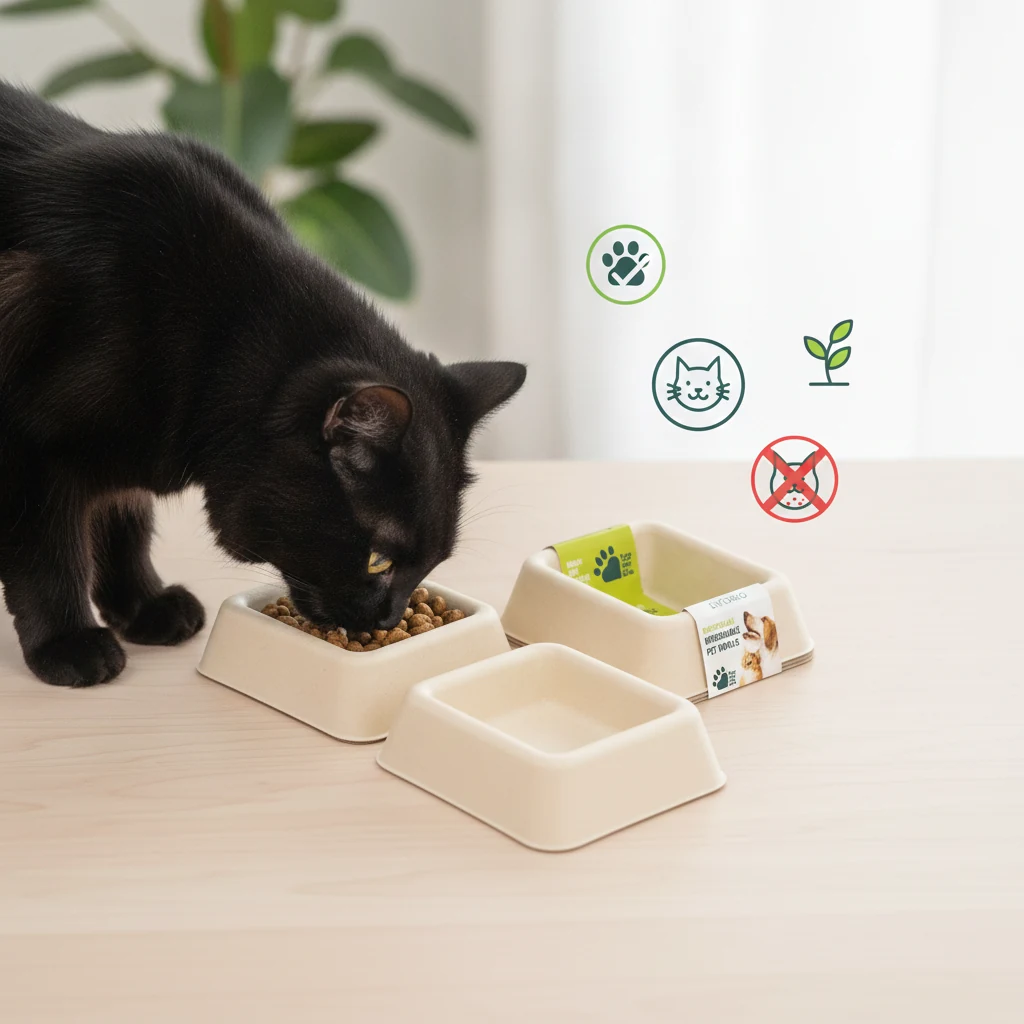
"For a cat with chin acne, the single fastest change most owners can make is disposing of the plastic bowl."
Why plastic bowls cause feline chin acne
Plastic bowls develop invisible micro-scratches from every meal and every wash. Those scratches trap bacteria, food oils and saliva — the exact mix that inflames the sebaceous glands on a cat's chin. Even a bowl that looks clean can carry a bacterial load high enough to keep the acne cycle going indefinitely. Veterinary sources (VCA, PetMD, Veterinary Partner) consistently name plastic as the number one bowl-related trigger, alongside detergent residue when bowls aren't rinsed thoroughly.
The second factor is contact: plastic tends to be deeper and softer, so cats press their chin into it every time they eat or drink. Shallow, rigid, non-porous bowls reduce that contact and give the skin a chance to heal.
Scenario 1 — Prevention: use bowls that don't trap bacteria
The clean-cat, no-acne setup is simple: a shallow, non-porous bowl that gets replaced or thoroughly cleaned often enough that bacteria never build up. EcoPetBox biodegradable bowls are moulded recycled paper pulp — smooth, non-porous, and shallow enough that a cat's chin barely touches the rim. Because they cost a fraction of ceramic or steel, most owners rotate through a fresh bowl every few days instead of trying to sanitise the same one indefinitely.
No plastic. No detergent residue (many owners use hot water only, since the bowl is replaced). No micro-scratches. That's the entire preventive stack in one product.
Scenario 2 — Recovery: replace the bowl every day
If your cat already has chin acne, vets typically recommend three things: gently clean the chin, switch away from plastic, and reduce bacterial load at the feeding station. The last one is where a disposable bowl outperforms every washable alternative. Use a fresh EcoPetBox bowl every day during the acute phase — 7 to 14 days — and the bacterial cycle breaks. No overnight residue, no film building up on the rim, no need for harsh detergents near the food.
Once the chin has cleared, drop back to replacing the bowl every 3–5 days. Most owners find they don't want to go back to plastic — the difference in coat and chin condition is visible within two weeks.
What vets recommend for cat chin acne
Standard veterinary guidance: switch to stainless steel, ceramic or glass — or, more practically for many households, a shallow single-use bowl that removes the contamination problem entirely. Wash daily with hot water and rinse thoroughly. See a vet if there's swelling, bleeding, pus or the cat is scratching aggressively, since bacterial or fungal infection may need topical or oral treatment on top of the bowl change.
Plastic bowl vs EcoPetBox biodegradable bowl
Where each bowl type stands on the factors that actually drive feline chin acne.
| Factor | EcoPetBox bowl | Plastic bowl |
|---|---|---|
| Micro-scratches trapping bacteria | None — replaced before it matters | Accumulate with every meal and wash |
| Detergent residue on the rim | None needed — hot-water rinse or replace | Common cause of chin flare-ups |
| Chin contact with the bowl surface | Shallow, minimal contact | Often deep, constant chin pressure |
| Bacterial load after 24 hours | New bowl — zero | High, even after washing |
| Suitable during acne recovery | Yes — daily replacement | No — vets recommend switching |
| End-of-life | Biodegrades in 3–6 months | Landfill for decades |
Cat chin acne — the practical checklist
- Stop using plastic bowls today — food and water
- Use a shallow, non-porous bowl the cat's chin barely touches
- In the acute phase, replace the bowl every 24 hours for 1–2 weeks
- Rinse thoroughly — detergent residue can trigger the same inflammation
- Wipe the chin gently with a warm damp cloth once a day
- See a vet for swelling, pus or bleeding — infection may need treatment
- After clearing, keep a rotation of fresh bowls to prevent recurrence
Frequently asked questions
Do plastic bowls really cause cat chin acne?
Plastic bowls are one of the most consistently cited triggers by veterinary sources (VCA, PetMD, Veterinary Partner). They're not always the sole cause, but switching away from plastic is the first change most vets recommend and often resolves mild cases on its own.
Read the full articleWhat's the best bowl for a cat with chin acne?
A shallow, non-porous bowl that's either cleaned to sterile standards daily or replaced. Stainless steel, ceramic and glass all work if washed thoroughly. Disposable biodegradable bowls like EcoPetBox remove the cleaning problem entirely — you just use a fresh one.
Read the full articleHow often should I replace a disposable bowl during acne recovery?
Every 24 hours for 1–2 weeks during the acute phase. Once the chin clears, every 3–5 days is enough for maintenance. Always use hot water to rinse between fills.
Read the full articleCan detergent residue also cause chin acne?
Yes — Veterinary Partner specifically lists detergent residue as a contact irritant that can mimic or worsen chin acne. If you keep a washable bowl, rinse it thoroughly with hot water after every wash.
Read the full articleRelated articles
 Related articles
Not ready to enquire yet? These may answer your question first.
July 23, 2026

Disposable vs. ceramic cat bowls: which is better for your cat's health?
Read the full article: Disposable vs. ceramic cat bowls: which is better for your cat's health?July 13, 2026
Cat not using the litter box? A complete guide to causes and fixes
Read the full article: Cat not using the litter box? A complete guide to causes and fixesSeptember 4, 2026
Square by design: why EcoPetBox pet bowls aren't round
Read the full article: Square by design: why EcoPetBox pet bowls aren't roundBowls that don't cause chin acne
See the EcoPetBox biodegradable pet bowls — shallow, non-porous and safe for cats with sensitive chins.