
Cat travel & hygiene
Traveling With Cats: Reusable vs Disposable Litter Trays
Packing a litter tray for a cat means planning for more than the outward journey. Where will it be used, how will waste be handled, and what comes home afterwards? For a move, a holiday or a boarding stay, the useful comparison is not simply plastic versus paper. It is the cleaning routine you can actually carry out away from home.
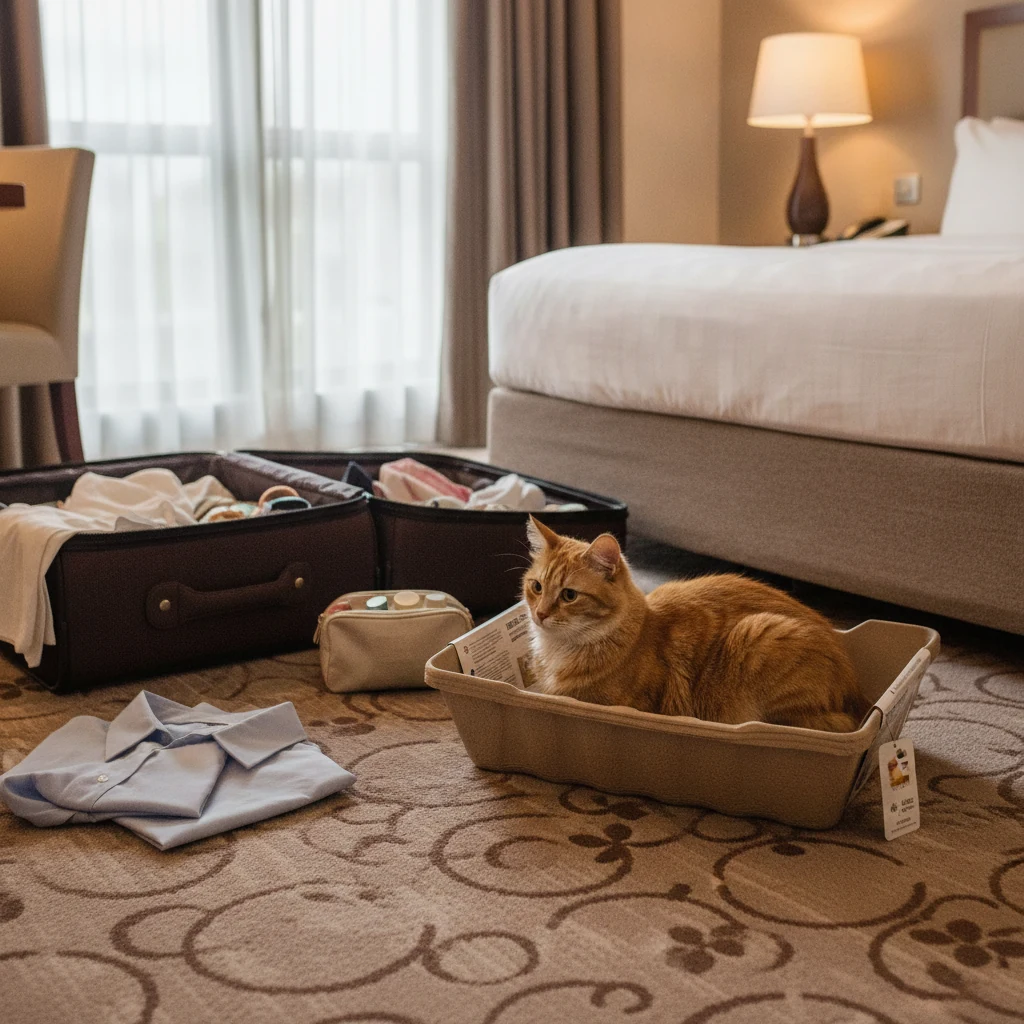
“A fresh tray removes one cleaning job. It does not replace safe transport, daily waste removal or handwashing.”
Start with the journey, not the tray
For a short vet visit, you may not need a litter tray during the drive. Ask your vet about your cat’s needs, especially after surgery or when illness is suspected. For longer journeys, plan safe toilet opportunities and a suitable setup on arrival rather than assuming a cat will use a tray while the car is moving.
Keep your cat in a secure carrier while traveling. Never open the carrier at an exposed roadside stop. If a toilet break is needed, stop first and use a fully enclosed, escape-proof space. A litter tray is not a substitute for a carrier or a restraint.
A reusable tray works when you have a cleaning plan
A washable tray can be a sensible choice for frequent trips to the same place, particularly when it is dedicated to your cat and you have appropriate cleaning facilities. Empty it, clean it properly, dry it and pack it so it does not soil luggage or bedding.
The awkward part is the return trip. A holiday bathroom may not have a suitable wash-up area, and a used tray needs separate containment until you can clean it. Do not assume a quick rinse makes equipment suitable for sharing with another cat. In a boarding facility or clinic, follow the team’s cleaning and disinfection instructions.
What a disposable travel tray changes
A disposable tray lets you start with a fresh tray and leave without packing a used box for the journey home. EcoPetBox, part of Bellus Pet Group, offers moulded paper-fibre litter trays: add litter at your destination, remove waste during use and replace the tray when needed.
This changes the handling routine, not the biology of waste. A fresh tray does not sterilise the room, carrier or scoop, and we are not claiming that it prevents infection. If a cat may have an infectious illness, tell the receiving vet or boarding team in advance and follow their transport, cleaning and waste protocol.
Keep familiar litter—not someone else’s used litter
Bring the litter your cat normally uses and choose a tray large enough for the cat to turn comfortably. At your destination, place it in a quiet, accessible spot away from food and water. Give the cat time to settle; changing both the litter and the surroundings at once adds another unfamiliar element.
Familiar means the same litter type, not used litter from another household or boarding tray. Keep arriving equipment dedicated to your own cat. For a stay with several cats, plan enough separate toilet resources rather than making one travel tray serve every animal.
Make the waste decision before you leave
Remove faeces and soiled litter daily, and wash your hands afterwards. Carry spare trays, waste bags and a scoop, and find out which bin the accommodation permits. Bag used litter and the tray as required locally; do not put a contaminated paper tray in paper recycling.
Biodegradable material does not make cat waste harmless or automatically acceptable in compost or organic-waste collections. Follow local rules for the litter and tray together. If the cat is ill or the equipment was used in a clinic, use the waste route specified by that facility.
Which option fits your trip?
Choose a reusable tray if you can reliably clean, dry and contain it before the return journey. Choose a disposable tray if the main difficulty is carrying a used box home, moving between accommodation, or setting up a temporary toilet without a washing routine. Either way, keep the carrier secure and the toilet equipment separate from clean belongings.
There is no universal environmental winner based on the word “disposable” or “reusable” alone. Materials, how often you reuse a box, washing and local disposal all matter. For EcoPetBox, the practical travel benefit is a replaceable tray—not a promise of zero waste or disease prevention.
Further reading & scope
Travel and tray advice: International Cat Care — traveling with your cat, Cats Protection — traveling with your cat and Cats Protection — toileting. For handwashing and daily litter-box cleaning, see CDC — cats.
This is general care information, not a veterinary treatment or infection-control protocol. These organisations do not endorse EcoPetBox.
Travel litter trays: the practical comparison
Both options need daily waste removal and safe handling. The difference is what happens to the tray after use.
| What to plan | EcoPetBox disposable tray | Reusable travel tray |
|---|---|---|
| Before use | Start with a fresh tray | Bring a clean, dry tray |
| During the stay | Remove waste; replace when needed | Remove waste; clean when needed |
| Before traveling home | Bag and dispose under local rules | Empty, clean, dry and contain |
| Cleaning facilities | No tray wash-up before disposal | Suitable wash-up facilities needed |
| Infection precautions | Follow vet protocols; disposal is not disinfection | Follow vet cleaning and disinfection protocols |
| Waste & resources | A replacement tray and waste handling | Washing resources and eventual disposal |
Pack for a clean arrival and a clean departure
- Secure carrier and escape-proof toilet-break plan
- Your cat’s usual litter and a suitable-size tray
- Spare tray, scoop and waste bags
- Separate containment for used equipment
- Accommodation’s waste rules checked in advance
- Vet instructions for illness or recovery
Frequently asked questions
Is a disposable tray more hygienic for cat travel?
It removes the need to clean and transport a used tray after disposal. It does not prove a lower infection risk, and daily waste removal, handwashing and veterinary precautions still apply.
Read the full articleCan my cat use a tray while the car is moving?
Keep your cat secured in its carrier while driving. Plan toilet opportunities only when stopped in a safe, enclosed space; ask your vet about arrangements for a long journey.
Read the full articleCan I recycle a used paper litter tray?
Do not put a tray contaminated with litter, urine or faeces in paper recycling. Follow local household-waste rules or the facility’s instructions.
Read the full articleShould I bring a tray supplied by the boarding facility home?
Ask the facility first. Do not carry another cat’s used litter or shared equipment into your home. Follow its guidance on cleaning, containment and disposal.
Read the full articleRelated articles
 Related articles
Not ready to enquire yet? These may answer your question first.
July 1, 2026

How to pick a disposable litter tray for travel
Read the full article: How to pick a disposable litter tray for travelSeptember 4, 2026

Square by design: why EcoPetBox pet bowls aren't round
Read the full article: Square by design: why EcoPetBox pet bowls aren't roundJuly 7, 2026
Is EcoPetBox good for travel, RV, Airbnb & temporary use?
Read the full article: Is EcoPetBox good for travel, RV, Airbnb & temporary use?A fresh tray for your next stop
Explore EcoPetBox moulded paper-fibre trays for holidays, moves and temporary setups.