Comportamiento felino
Por qué los gatos prefieren bandejas de papel al plástico — y qué te está diciendo tu gato
Si tu gato ha ignorado una bandeja limpia, la ha usado una vez y luego la ha evitado, o prefiere una caja de cartón a la bandeja cubierta que acabas de comprar — no está siendo difícil. Te está diciendo algo concreto sobre el material.
«Tu gato es exigente con su bandeja. Hay un motivo. Y no es culpa del gato — es el material.»
Qué buscan los gatos al elegir dónde ir
En la naturaleza, los gatos eligen sustratos con tres cualidades: suaves bajo la pata, absorbentes y fibrosos. Tierra, hojarasca, arena — esa es la lista natural. Toda preferencia doméstica por la bandeja se remonta a esos instintos, incluso en un gato que nunca ha salido.
El plástico no está en esa lista. Tampoco ninguna superficie lisa, no absorbente y químicamente ruidosa. Cuando un gato inspecciona una bandeja nueva, esa es la lista que revisa en dos segundos.
Cómo se siente el plástico para un gato
Frío, duro, no absorbente y — una vez usado — químicamente ruidoso. Incluso una bandeja fregada conserva restos de orina, biofilm y detergente. La nariz del gato lo lee como «ya usada» y el instinto lo lleva a otro sitio.
Ese es el mecanismo tras dos quejas habituales: «lo usó una vez y paró» y «prefiere la caja del paquete». Ambas son la misma respuesta al mismo problema de material.
Por qué la pulpa de papel se parece más a lo natural
La pulpa de papel reciclado moldeada es suave a la pata, absorbente, fibrosa y sin olor a plastificante. Como se desecha en lugar de lavarse, nunca acumula ese rastro de detergente que aleja al gato de una bandeja plástica al cabo de semanas.
Para la nariz y las patas, esa combinación se acerca mucho más a «tierra» que a «caja». Se ve en la entrada: los gatos suelen entrar directamente en la primera exposición, sin el olfateo cauteloso y el retroceso que provoca el plástico.
La evidencia conductual de hogares reales
Los propietarios reportan el mismo patrón: gatos que entran directamente al primer contacto con una bandeja de pulpa fresca, rechazan bandejas plásticas viejas a medida que se acumula el biofilm y siguen fieles al papel aunque la de plástico esté también disponible.
No es preferencia en sentido humano — es una respuesta conductual estable a propiedades del material. Distintos gatos, distintos hogares, el mismo resultado.
La señal más fuerte de todas — gatos que duermen en bandejas vacías
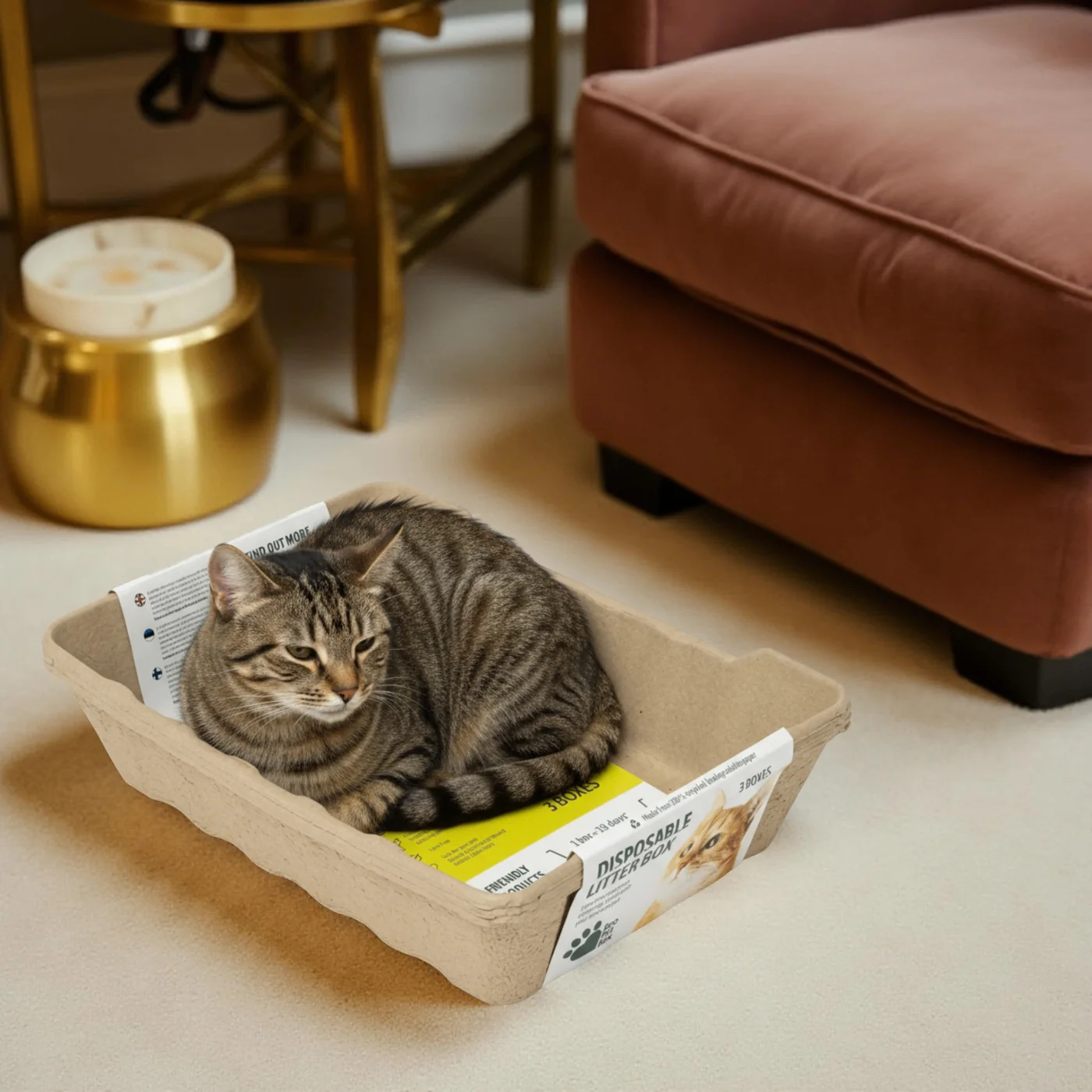
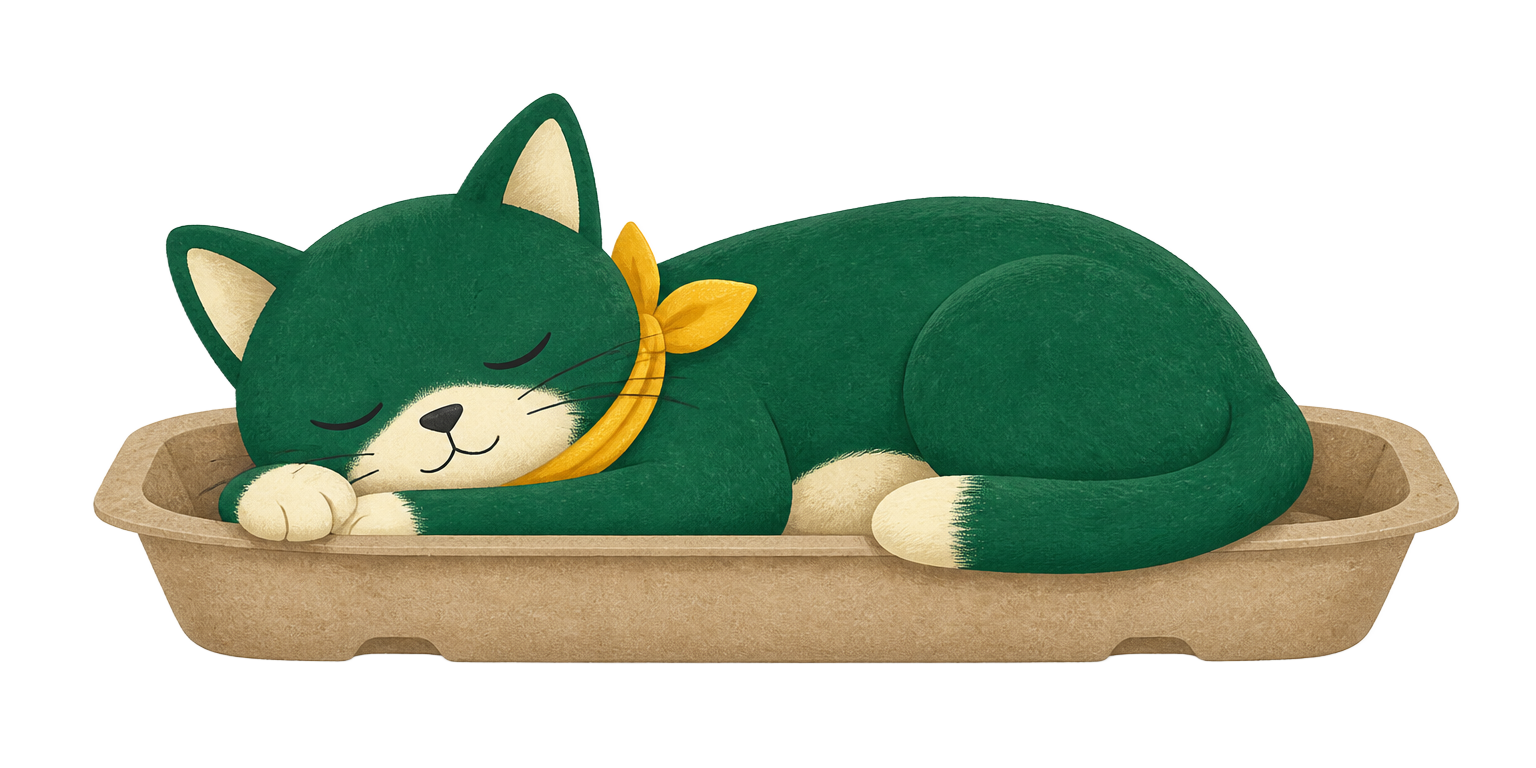
La señal más clara es la contraria a evitar: gatos que se acurrucan voluntariamente en una EcoPetBox vacía como si fuera una cama. Con el plástico esto no ocurre. Con la pulpa sí, porque el material pasa su propio test de confort — suave, cálido, no resbaladizo, sin olor químico.
Si un gato está dispuesto a dormir en la bandeja, la bandeja no puede ser el motivo por el que la evitaría. Es la señal más fiable que puedes obtener sobre una caja de arena, y la da voluntariamente el animal que debe convivir con tu elección.
Cómo leer las señales de tu gato
- La usa una vez y la evita → rechazo de material, no «suciedad»
- Prefiere una caja de cartón → la fibra gana al plástico
- Deja las patas colgando del borde → bandeja pequeña o resbaladiza
- Olfatea, retrocede, va a otro sitio → olor químico o de biofilm
- Entra directamente → el material pasa el test del sustrato salvaje
- Duerme en la bandeja vacía → máxima aprobación del material
Preguntas frecuentes
¿Por qué mi gato rechaza una caja de arena de plástico limpia?
Limpiar elimina la suciedad visible pero deja biofilm en microrayaduras y restos de detergente. La nariz del gato lo lee como «usada» y «química», y el instinto lo empuja a otro sitio.
¿Por qué mi gato prefiere una caja de cartón antes que la bandeja?
El cartón comparte tres propiedades con los sustratos salvajes preferidos: suave, absorbente y fibroso. Las bandejas de plástico no comparten ninguna. Es preferencia de material, no mal comportamiento.
¿De verdad es diferente una bandeja de papel para el gato?
Sí. La pulpa de papel reciclado moldeada sin recubrimiento es suave a la pata, absorbe el olor en vez de reflejarlo y no arrastra restos de detergente. Los propietarios reportan aceptación más rápida y ninguna deriva con el tiempo.
Artículos relacionados
 Artículos relacionados
¿Aún no te decides a escribirnos? Estos artículos suelen responder las dudas más frecuentes.
July 13, 2026
¿El gato no usa el arenero? Guía completa de causas y soluciones
Leer el artículo completo: ¿El gato no usa el arenero? Guía completa de causas y solucionesJuly 2, 2026
Por qué fabricamos areneros de papel reciclado — no de plástico
Leer el artículo completo: Por qué fabricamos areneros de papel reciclado — no de plásticoJuly 2, 2026
Por qué tu arenero de plástico empeora cada mes
Leer el artículo completo: Por qué tu arenero de plástico empeora cada mesEnséñanos a tu gato en una EcoPetBox
Si tu gato duerme en la bandeja, mándanos la foto — es la mejor prueba de que el material pasa su test.