
Cat behaviour & health
Cat not using the litter box? A complete guide to causes and fixes
Few things worry a cat owner more than finding a puddle on the rug or a mess just next to the tray. Litter box avoidance is one of the most common behavioural complaints vets hear — and it is almost never spite. Cats are meticulous animals; when they stop using their box, they are telling you something concrete about the box, the litter, the location, or their health. This guide walks through the real reasons cats refuse the tray, how to diagnose which one applies to your cat, and the practical fixes — including why a fresh, disposable setup often solves the problem overnight.
"When a cat refuses the litter box, it is almost always solving a problem — smell, texture, pain, stress or location. Your job is to find the one."
Rule out medical causes first
Before you touch the tray, the litter or the layout, rule out a medical cause. A urinary tract infection, bladder crystals, kidney disease, diabetes, arthritis or constipation can all make a cat associate the box with pain — and start eliminating elsewhere to escape that pain. Any sudden change in litter box behaviour in an otherwise settled cat is a vet visit, not a training problem.
Warning signs that point to a medical cause: straining, frequent tiny puddles, blood in the urine, crying while in the box, licking the genital area, or a cat suddenly avoiding a box they used for years. Older cats especially may stop climbing into a high-sided box because arthritis makes stepping in painful; the box is fine, the joints are not.
Cleanliness: the number-one behavioural cause
Cats have roughly fourteen times more scent receptors than humans. A box that smells acceptable to you can smell overwhelming to your cat. When the tray is not scooped often enough — or when the plastic base has absorbed months of ammonia into scratches and micro-cracks — many cats simply refuse to step into it. They will pick a cleaner spot: a bath mat, a pile of laundry, the corner of a rug.
The fix is almost mechanical. Scoop at least once a day, twice for multi-cat homes. Replace the litter completely on a regular schedule. And critically, replace the tray itself when odour builds up in the material. A plastic tub cannot be scrubbed back to neutral once biofilm and ammonia have soaked into the surface; a disposable moulded-fibre tray simply gets replaced, and the smell resets to zero.
Litter type and depth
Cats have strong texture preferences. Most prefer a fine, unscented, sand-like substrate that they can dig into and cover with. Sudden switches to a coarser pellet, a heavily scented clumping litter, or a crystal litter can trigger avoidance within days. If you have recently changed brand or type, that is your first suspect.
Depth matters too. Around 3–5 cm of litter is enough for most cats to dig and cover comfortably. Too shallow and their paws hit the tray floor; too deep and the surface feels unstable. If you switch litter, transition gradually over a week by mixing old and new — a hard swap is one of the most common triggers of refusal.
The box itself: size, sides, hoods and liners
A box that is too small is a very common issue, especially for large breeds like Maine Coons and Ragdolls. The general rule of thumb: the tray should be at least one and a half times the length of your cat from nose to base of tail. If your cat hangs over the edge or turns awkwardly to squat, they may start looking for somewhere roomier.
Hooded boxes trap odour inside, which humans appreciate and cats often do not. Plastic liners crinkle and snag claws. High-sided boxes that seniors and kittens can't climb into become invisible barriers. And a scratched, stained plastic tub that has been in use for two years is often the single biggest reason a previously reliable cat starts going elsewhere.
Location, privacy and traffic
Cats want to eliminate somewhere quiet, safe and easy to reach — but not cornered. A box tucked behind a noisy washing machine, next to the food bowls, or in a spot where the dog walks past can push a sensitive cat to find a calmer alternative. Boxes on a different floor from where the cat spends most of their day are also a common trap, especially for seniors.
The classic guideline is one litter box per cat, plus one, spread across the home so no cat has to walk past another to reach one. In a two-cat, two-story home that means three boxes in three locations. Resource guarding between cats is silent but real; a second, calm box on a different floor is often the whole fix.
Stress, new pets, new home
Cats read change as risk. A new baby, a house move, a new cat, a new dog, renovations, a change in your working hours — any of these can trigger stress-marking or litter avoidance. The behaviour usually appears within days of the trigger. Restoring routine, adding vertical space and hiding spots, using calming pheromone diffusers and adding an extra litter box in a quiet zone all help.
For cats that have started peeing on a specific soft surface (a rug, a laundry pile, a bed), clean the area with an enzymatic cleaner — not ammonia-based products, which smell like urine to a cat and reinforce the spot. Then physically block or cover the area for several weeks while you re-establish the box as the only acceptable option.
Why a fresh, disposable setup often solves it
When we hear from owners whose cat has started refusing a plastic box, the pattern is almost always the same: the box is over a year old, the plastic surface is scratched, the corners have absorbed odour, and no amount of scrubbing brings it back. Even a deep clean smells clean to the human and still smells lived-in to the cat.
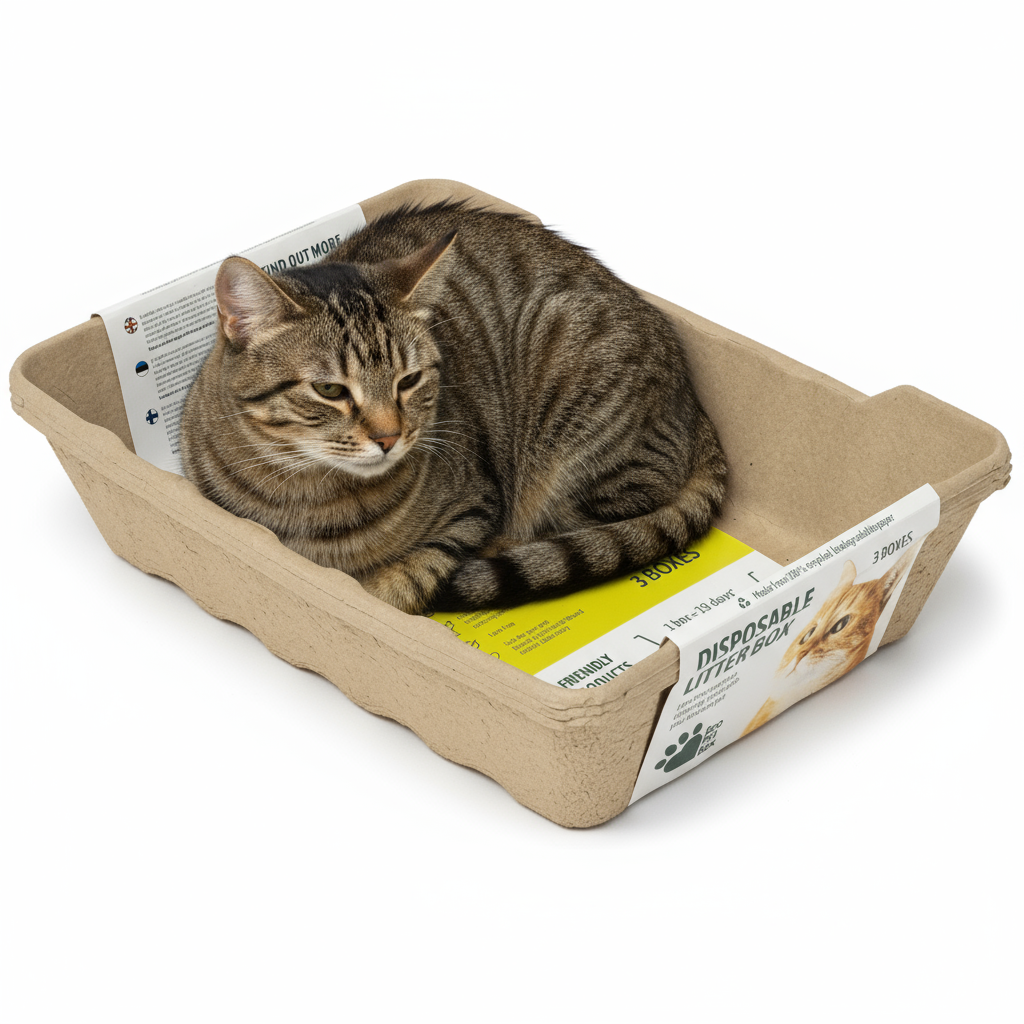
A disposable moulded-fibre tray like EcoPetBox short-circuits this whole loop. You replace the entire tray on a schedule — typically every one to two weeks per cat — so the surface is always genuinely new. There is no scratched plastic, no trapped ammonia in the base, no chemical fragrance masking the problem. For cats whose avoidance is driven by the box itself, switching to a fresh disposable tray often restores confident use within a day or two.
It also helps in the diagnostic phase: if you switch to a brand-new, unscented, correctly-sized disposable tray and the avoidance stops immediately, you have your answer. If it continues, the cause is medical, stress-related, or about litter type or location — and you can focus your energy there instead.
Old plastic tub vs fresh disposable tray for a cat that has started avoiding
When avoidance is driven by the box itself, the two options behave very differently over the weeks that follow.
| Factor | Fresh disposable tray | Old plastic tub |
|---|---|---|
| Surface condition | New, unscratched fibre every cycle | Scratched plastic accumulates biofilm |
| Trapped odour | Resets to zero on each replacement | Ammonia soaks into plastic and stays |
| Effort to reset | Lift out, dispose, drop in a new tray | Scrub, disinfect, dry, refill — and smell often lingers |
| Signal to the cat | Clearly new, clearly clean | May still smell 'used' to a scent-sensitive cat |
| Fit with sensitive cats | Unscented, low-side options for seniors | Often high-sided, sometimes hooded, sometimes scented |
| Material feel | Moulded fibre feels more natural and comforting, reducing stress | Hard plastic can feel cold and not natural |
A short checklist for fixing litter box avoidance
- Book a vet check if the behaviour is sudden or the cat is straining
- Scoop daily; replace the litter completely on schedule
- Replace the tray itself when it holds odour — don't keep scrubbing plastic
- Use unscented, sand-like litter at 3–5 cm depth
- Choose a tray at least 1.5× your cat's body length, low enough for seniors
- One box per cat, plus one, in quiet locations on each floor
- Clean accidents with enzymatic cleaner, never ammonia-based products
- Try a fresh disposable tray to isolate whether the box is the cause
Häufig gestellte Fragen
Why has my cat suddenly stopped using the litter box?
Sudden avoidance in an otherwise settled cat is a red flag for a medical problem — urinary tract infection, crystals, kidney disease, arthritis or constipation. Book a vet check first. Once medical causes are ruled out, work through cleanliness, litter type, tray condition, box size, location and stress in that order.
How often should I scoop and replace the litter?
Scoop at least once a day for a single cat, twice a day in multi-cat homes. Replace the litter completely on a regular schedule — weekly for most setups — and replace the tray itself as soon as odour holds in the material. With EcoPetBox, most households replace the whole tray every one to two weeks.
Ganzen Artikel lesenCan changing litter brands cause avoidance?
Yes. Cats have strong texture and smell preferences. A sudden switch to a coarser, scented or crystal litter is one of the most common triggers of refusal. If you need to change brand, transition gradually over about a week by mixing old and new.
How many litter boxes should I have?
The standard rule is one box per cat, plus one, placed in different quiet locations. In a two-cat two-floor home, that means three boxes across at least two floors. Resource guarding between cats is easy to miss and adding a second calm box often resolves avoidance on its own.
Ganzen Artikel lesenWill switching to a disposable tray help?
Often, yes — especially when the avoidance is driven by an old plastic tub whose surface has absorbed odour. A fresh, unscented disposable tray like EcoPetBox resets the smell environment and gives a scent-sensitive cat a clearly new surface. Many owners see confident use return within a day or two.
Is a hooded box or a plastic liner a good idea?
Both are convenient for humans and often disliked by cats. Hoods trap odour inside where the cat is, and liners crinkle and snag claws. If your cat is already avoiding, remove hoods and liners as part of the reset.
Ganzen Artikel lesenVerwandte Artikel
 Verwandte Artikel
Noch nicht bereit für eine Anfrage? Diese Artikel beantworten deine Frage vielleicht schon vorab.
July 23, 2026

Einweg- vs. Keramiknäpfe für Katzen: Was ist besser für die Gesundheit?
Ganzen Artikel lesen: Einweg- vs. Keramiknäpfe für Katzen: Was ist besser für die Gesundheit?July 2, 2026
Kinnakne bei Katzen und Plastiknäpfe: Warum der Napfwechsel oft die Lösung ist
Ganzen Artikel lesen: Kinnakne bei Katzen und Plastiknäpfe: Warum der Napfwechsel oft die Lösung istJuly 2, 2026
Warum Katzen Papierschalen dem Plastik vorziehen – und was Ihre Katze Ihnen sagt
Ganzen Artikel lesen: Warum Katzen Papierschalen dem Plastik vorziehen – und was Ihre Katze Ihnen sagtReset the box, reset the behaviour
A clean, unscented, correctly-sized tray is one of the fastest tools you have. Try a fresh EcoPetBox disposable tray and see whether the box itself was the problem.